Write-up Contributor:
Conscious Design Principles


Designing for Life


Oudewand 57, 7201 LK Zutphen, The Netherlands
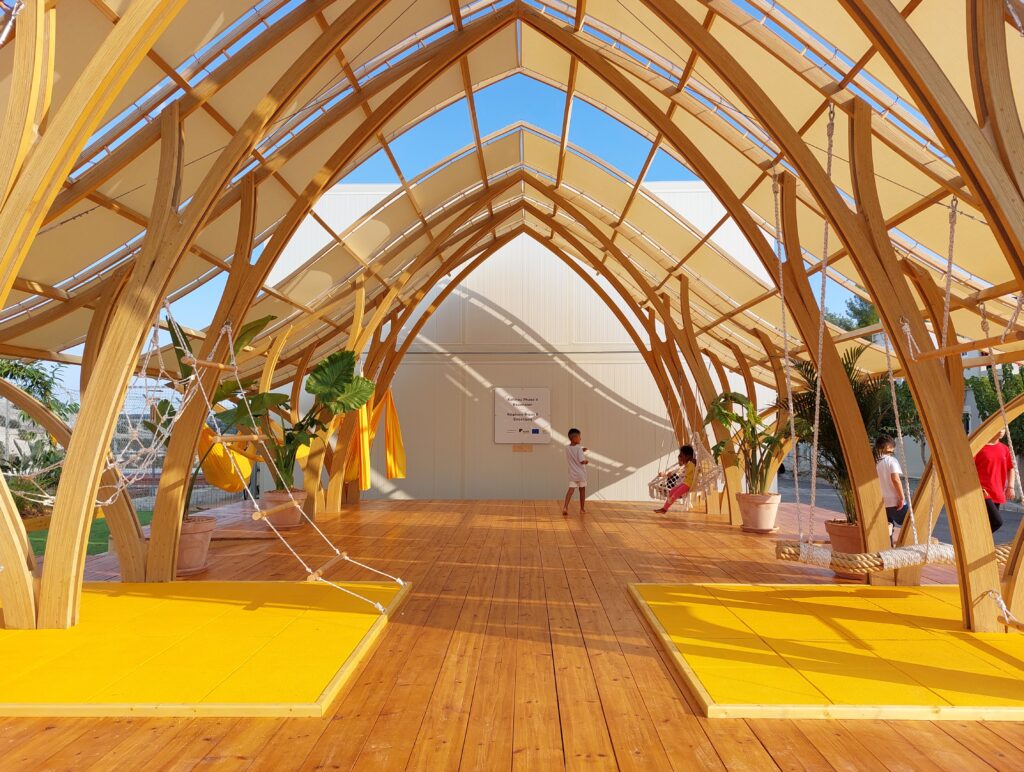
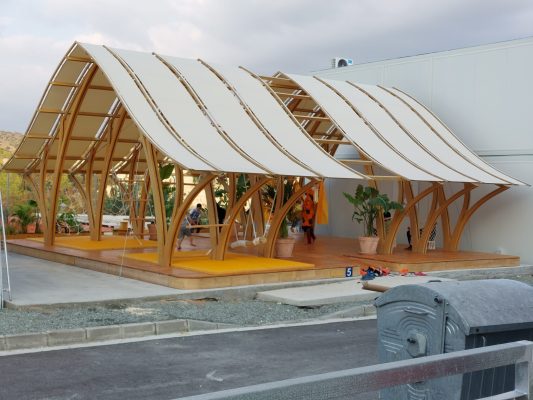
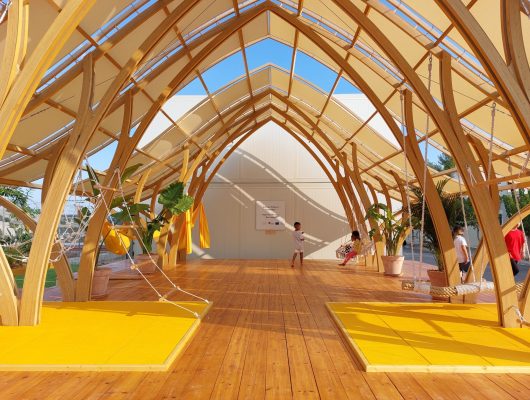
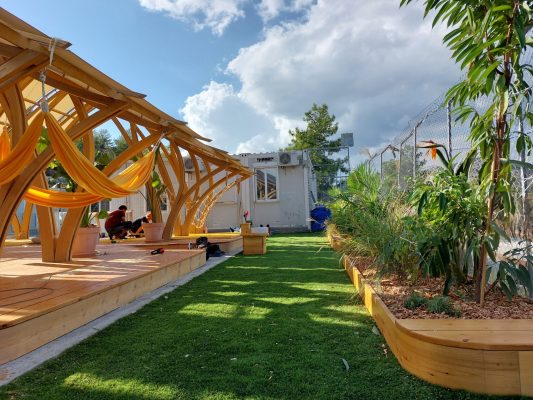
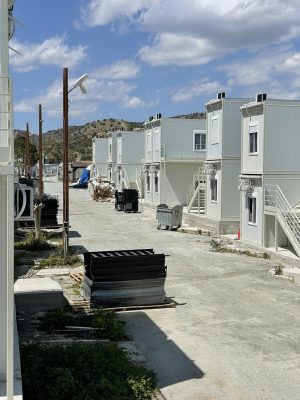
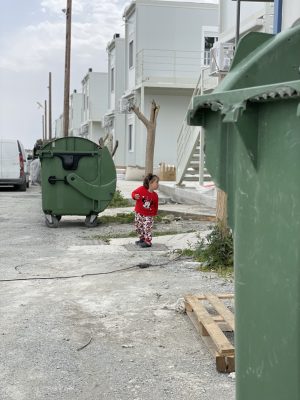
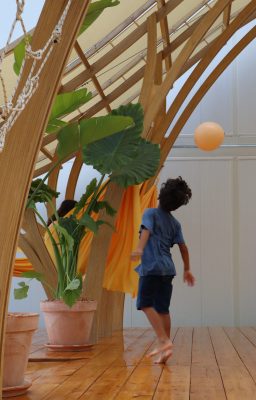
Temple for the Golden Trees is a therapeutic safe space for children in the Kofinou Refugee camp in Cyprus. Fueled by a neuro-aesthetic framework, trauma-informed design and participatory design practices, this communal space is a healing intervention, compensating for the deprived context of containers, asphalt and isolation.
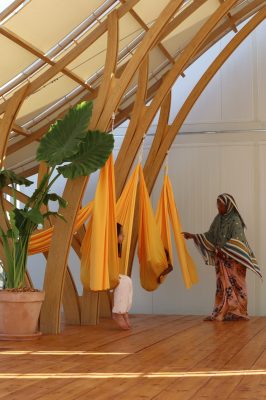
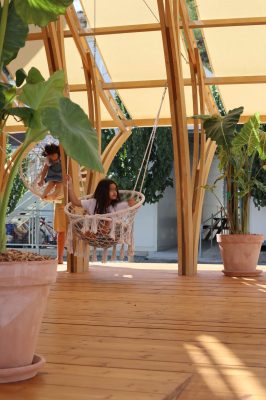
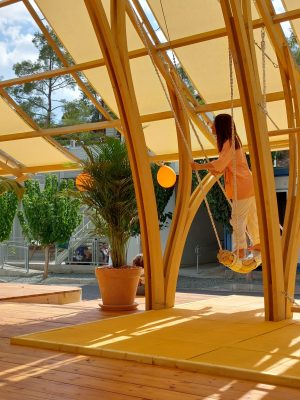
Conscious Design Principles promote the emergence of healthy built environments and a generative people-place dialogue. The principles highlight the importance of collaborative processes, more aware decision-making based on context and evidence, and responsive qualities that enable adaptation and attunement over time. Explore how this project applied the principles:

Co-imagined

Co-designed

Co-created

Co-stewarded
Co-Designed
Children in refugee camps are one of the least accessible target groups to work with when it comes to design participation, because of the many strict regulations creating isolation. Simultaneously, this group has an incredible need to be empowered in their sense of dignity, autonomy and most of all to be seen, heard and understood in their emotional needs.
First, to get access to the camp and, therefore, to the children, we needed to develop a structural design and apply for a permit with the ministry. Since we wanted to wait to define the space’s program, we came up with the concept of an overarching structure, with great height in the middle and more refuge in the aisles. This way we secured enough flexibility for different functions in the space, to be determined in contact with the children later.
The camps allowed us only to visit the children a couple of times, so we needed to come up with a cohesive strategy. Displaced children are often traumatized, and compromised in their ability for introspection and can be in a distressed embodied state by default.
To stimulate social interaction, embodied creativity, and connection, we started with several group activities. For example games of passing around a ball and expressing something about yourself, or standing in a circle and collectively leaning into a rope to create a sense of trust.
Next, the children created so-called ‘creatures’ from scrap material with each their own identity, which were to become the imagined users of the models we would create later. Since refugee children are never asked about their needs directly, we gave them animate objects on which they could project their needs indirectly. This also provided us with something to talk about, to ask questions, and for children to empathize with the user more tangibly.
Finally, we gave two design assignments, that formed a set of references for our design conceptualization of the space.
Co-created
In reflection to the first participatory design efforts, it was hard to select or distill the best ideas. Moreover, many children had left the camp and new children had entered as well. This made it impossible to draw any conclusions about what the best matching design decisions would be for this dynamic group of users. Therefore we came up with a complimentary approach of trial and error.
Since we do both the design and construction of spaces, we were in a unique position to alter the design during the construction efforts. We came up with different ideas to try in the space and see how they were liked or how they could be further attuned, such as interconnected hammocks, climbing ropes and a community swing. Eventually, we also became aware that the children liked all additions to the space to be flexible and adaptive. The main area was even better functioning when there was no addition at all and stayed free for running, and group play.
Eventually, we also involved the children through several workshops where they could contribute to the construction of the spaces by helping in painting and making wind chimes.

Context Driven

Evidence Based

Integrated

Observational
Evidence Based
The population in the refugee camp is extremely dynamic and diverse. Children are different in age, culture, religion, values, education level, and so on. Even when we got to know a specific group of children, the space needed to accommodate future children as well. For this reason, we relied heavily on our framework of neuro-aesthetics, environmental psychology and Biophilic Design, as a strategy to indicate the universal, and cross-cultural needs. At the same time, we tried to diverge as much as possible within this scientific framework to categorically meet and be inclusive to a whole variety of needs, especially when it comes to neuro-divergence.
The scientific framework is grounded in the sciences that underlie theories such as Biophilia: such as evolutionary biology and psychology, human ethology, anthropology, neuroscience, and the study of human nature. Studying our shared human nature and evolutionary past shows us that we have a shared history in evolving as a species and thereby developing universal human traits in relationship to our physical (sensory) environment. To function as a species we are deeply dependent on the right balance of nurturing sensory input, just like our need for vitamins and minerals. Across the literature, there are at least 4 universal needs to be recognized that are deeply embodied:
See a link to our framework here
To provide the best experiences, we use technologies like cookies to store and/or access device information. Not consenting or withdrawing consent, may adversely affect certain features and functions.
