Supporting flourishing in cities with ‘what works’ research

How we create cities that better contribute to human flourishing is dependent on a good understanding of ‘what-works’. However, when considering the most recent definitions and standards, the science of urban flourishing is limited; inhibiting what may be credibly translated into evidence-informed practice. Within his talk, Jamie offers two ways in which the University of Manchester and Buro Happold are addressing key challenges associated with this complex but fascinating area. He will discuss the importance of new tools that go beyond happiness and life satisfaction, and the need to address the long-standing ‘candy-floss’ criticism – with stronger research (or ‘parsnips’). The talk will draw upon recent and forthcoming tool Open Access publications such as MOHAWk and NOURISH, and ‘natural experiment’ case studies such as Grow Green and Brent Cross Town (BXT).

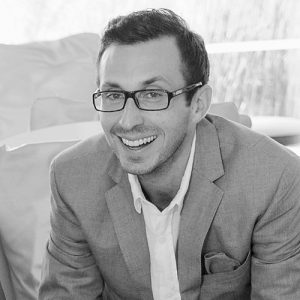
Speaker: Jamie Anderson (Urban Wellbeing Lead, Buro Happold)

Jamie has 16 years professional experience, split between research and practice: creating and using strong urban wellbeing evidence. His PhD was supervised jointly by an urban designer and neuro-psychologist at Cambridge University. Most of his research focuses on sustainable city and neighbourhood design, in relation to Subjective Wellbeing and associated behaviours – such as the Five Ways to Wellbeing. Together with University of Manchester colleagues, he has developed new robust tools such as MOHAWk and NOURISH, and ‘action research’ using analogue and digital approaches, in particular – improving causal inference with natural experiments. Within Buro Happold’s sustainability team, he leads a range of work improving the interface between urban design and the science of wellbeing. Most recently and on behalf of Argent Related, he led an overarching wellbeing strategy and the first stages of a Flourishing Index, to be used to evaluate a large regeneration project – Brent Cross Town (BXT), in north London.

Connection & BelongingHealth & Wellbeing
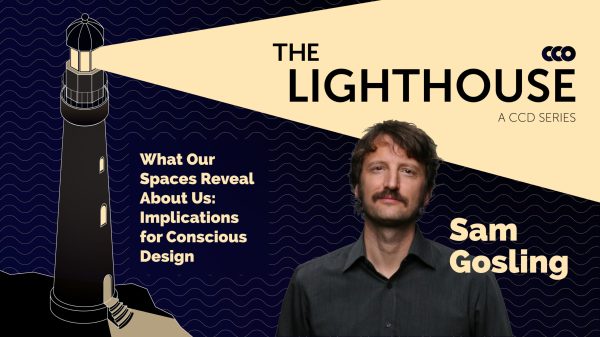
What Our Spaces Reveal About Us: Implications for Conscious Design | Sam Gosling | The Lighthouse
Sam Gosling
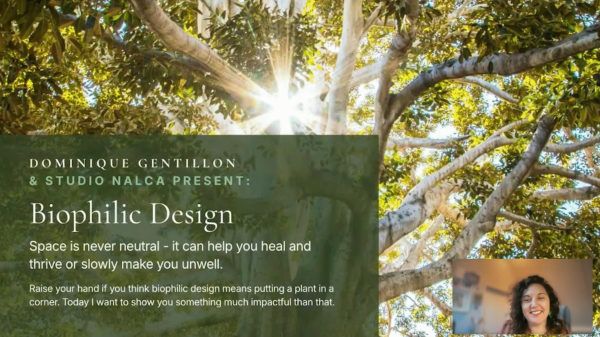
Biophilic Design | Dominique Gentillon
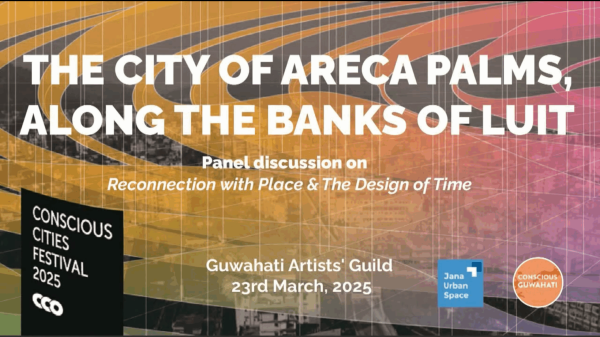
Panel Discussion: Designing Our Way Back — Time, Place, and Urban Reconnection
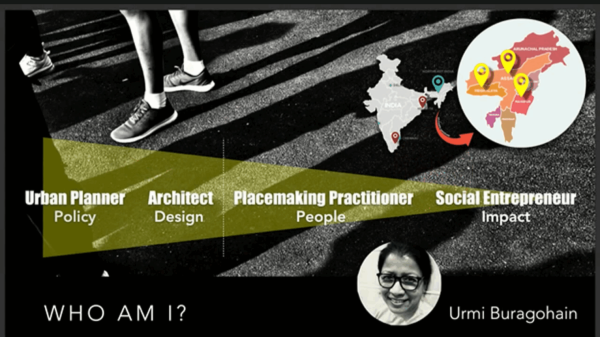
Reclaiming Belonging: Indigenous & Trauma-informed Placemaking by Urmi Buragohain
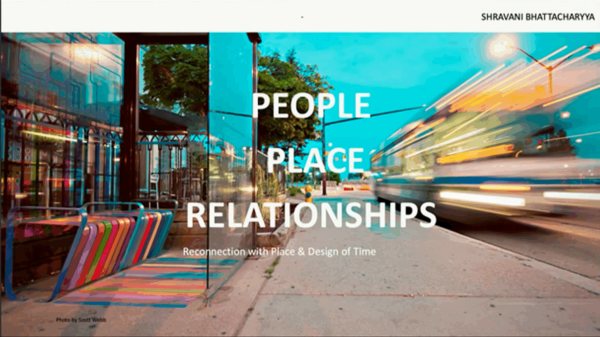
People Place Relationships: Reconnection with Space & Design of Time by Shravani Bhattacharyya
(UN)Sustainable Cities: Urbanization & Ecology by Dr. Rachna Yadav

Join and experience more as a Member

  • Access all our publications
  • Attend our events and access recordings
  • Offers from Partners in our network
  • Support the Conscious Cities movement!
  • Receive updates on new content and events

Access all our publications

Attend our events and access recordings

Offers from Partners in our network

Support the Conscious Cities movement!

Receive updates on new content and events

Cancel any time