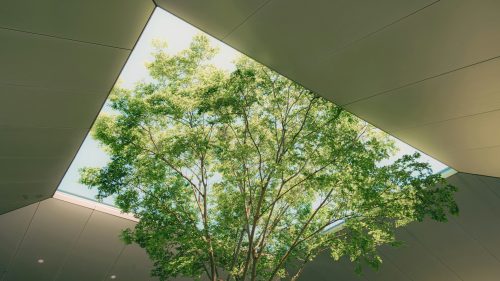


This blog post briefly explores how Conscious Design can reshape the ways we understand and cultivate skills and productivity in contemporary environments. Moving beyond narrow economic definitions, it situates productivity as the sustained capacity of individuals and communities to learn, collaborate, and innovate within nurturing environments. Drawing from environmental psychology, educational design, and urban planning, this piece aims to demonstrate how spatial and systemic choices directly influence cognitive, social, and adaptive skills. Evidence from existing studies on biophilia, wayfinding, and workplace design is combined with a practice-based case study of a decentralized educational initiative that consciously designs learning environments for inclusion and resilience. The exploration also extends to urban planning, proposing “regenerative cities of skills” where public spaces, mobility systems, and civic infrastructures embed opportunities for lifelong learning. Finally, it identifies three practical directions—regenerative procurement, the Invisible Backpack design lens, and Conscious Cities of Learning—as actionable pathways for embedding skills and productivity into the built environment.
Introduction
The discourse on skills and productivity has long been dominated by economic framings. Skills are typically defined as competencies that enhance employability, while productivity is measured in terms of efficiency, output, and growth. These framings, while practical in labor market contexts, often overlook the broader human and social dimensions that underpin long-term flourishing.
Conscious Design, as advanced by the Conscious Cities movement, provides a framework for expanding these definitions. It emphasizes environments that are intentionally designed to align with human well-being, creativity, and community resilience. In this framing, skills extend beyond technical or cognitive abilities to encompass adaptive, social, and emotional capacities shaped by environments. Productivity is not limited to economic throughput, but understood as the sustained capacity to learn, adapt, and collaborate.
I argue that environments—whether classrooms, offices, or cities—are not neutral backdrops but active mediators of skills and productivity. I draws on three sources of insight:
- Evidence from environmental psychology demonstrating measurable links between design and human performance.
- Practice-based findings from a decentralized educational initiative designed to support diverse learners.
- Emerging research on urban planning and therapeutic environments as platforms for civic skill-building.
By grounding inspiration in evidence and actionable strategies, I aim to contribute to Conscious Design scholarship with a rigorous account of how design choices shape skills and productivity at individual, organizational, and civic scales.
Beyond Efficiency: Rethinking Productivity
Conventional measures of productivity prioritize speed, quantifiable outputs, and cost-efficiency. These measures, however, often drive extractive dynamics that undermine creativity and resilience. Employees working under such models frequently experience stress, burnout, and disengagement, leading to reduced innovation capacity and high turnover rates.
A Conscious Design perspective reframes productivity as regenerative: the ability of environments to cultivate rather than deplete human potential. This reframing resonates with research in environmental psychology and workplace design. For example, studies show that access to natural light significantly improves memory retention and enhances sleep quality, leading to better long-term performance.1 Workers in biophilic environments report significantly higher levels of creativity and well-being.2 Conversely, environments with high noise levels have been shown to impair cognitive performance, increase errors, and lower concentration.3
These findings indicate that productivity can be measured not simply by immediate outputs, but by the sustained capacity of individuals to perform, adapt, and innovate over time. This shift aligns with Conscious Design’s emphasis on environments as dynamic systems that support human thriving.
Environmental Psychology and Skills Development
Environmental psychology offers a robust body of evidence linking spatial design to cognitive and social outcomes. Several dimensions are particularly relevant to skills and productivity:
- Wayfinding and cognitive load: Poorly designed navigation systems increase stress and cognitive overload, reducing attention for primary tasks.4 Clear, intuitive wayfinding reduces mental strain, allowing users to focus cognitive resources on skill-related activities.
- Spatial layout and collaboration: Environments that balance private and shared spaces enhance both concentration and group problem-solving.5 Open-plan offices without adequate zoning often decrease productivity due to distraction, while flexible coworking designs improve innovation by fostering peer learning.
- Biophilia and stress reduction: Exposure to natural views, greenery, or biomorphic design elements lowers stress levels and supports cognitive flexibility.6 This enhances adaptive skills such as creativity and decision-making under pressure.
- Acoustics and attention: Chronic noise exposure has been linked to reduced reading comprehension, impaired memory, and increased fatigue.7 Conscious acoustic design, therefore, directly influences both skill acquisition and productivity.
Taken together, these findings suggest that skills are not only taught through formal curricula but cultivated by the environments in which people operate. The design of workplaces, classrooms, and civic spaces fundamentally shapes people’s ability to concentrate, learn, and collaborate.
Case Study: A Conscious Design Laboratory in Practice
To test these principles in real-world contexts, I established Tianmei World Academy a decentralized “network of classrooms” cross-cultural and cross-disciplinary educational platform that applies Conscious Design and environmental psychology to education. This initiative was developed in response to learners who described themselves as “puzzle people”—individuals with diverse interests that mainstream systems treated as distractions rather than assets.
The pedagogy is structured around three principles in line with Conscious Design strategies:
- The Puzzle Mindset: Diversity of skills and perspectives is reframed as a collective asset rather than an individual deficit.
- Collective productivity: Success is measured in terms of co-created value and shared outcomes, not isolated performance.
- Reflection before action: Each session begins with mindfulness exercises to create psychological safety before collaborative work.
One of the programs invited participants to redesign their personal environments—physical, digital, and social—to better support their goals. According to my own ongoing unpublished research, three months after the program 72% of the participants reported greater self-confidence in professional contexts, while 54% initiated new collaborative projects. These outcomes demonstrate measurable skill-building in areas such as self-confidence, collaboration, and leadership.8
In the same research, participants also reported increased openness to collaboration and a greater ability to articulate their skills. For example, one participant noted: “Before, I felt my multiple interests made me unreliable. Now I see them as my strength. I can connect across fields and cultures.” Such reflections illustrate how consciously designed environments can transform internalized narratives of deficiency into narratives of capacity.
Urban Planning for Lifelong Learning
Conscious Design principles extend beyond learning and work environments to the scale of cities. My future PhD research explores the intersection of Daoist philosophy and therapeutic urbanism as a framework for designing cities that cultivate well-being and learning.
Urban planning can support skills and productivity through three key mechanisms:
- Public spaces as learning platforms: Interactive installations in plazas, cultural markers in parks, and informal educational signage stimulate curiosity and cultural awareness.9 Cities such as Copenhagen have successfully integrated such strategies to foster community learning.10
- Mobility systems as reflective spaces: Night trains and long-distance rail can be examples of infrastructure reframed as environments that support reading, cross-cultural encounters, and reflective practices.11
- Civic infrastructures as anchors of competence: Libraries, makerspaces, and community centers can act as accessible hubs for skill development, entrepreneurship, and collaboration. Evidence shows that cities with strong community learning infrastructures have higher rates of local innovation and social trust.12
This vision of a regenerative city of skills situates productivity not in GDP, but in the flourishing of human potential across urban life.
Designing for Intersecting Global Challenges
We live in a time marked by intersecting global challenges: climate change, inequality, and economic volatility. Traditional extractive models of productivity, which prioritize short-term efficiency, are ill-suited to this context. Conscious Design offers pathways to resilience by embedding well-being, inclusion, and cooperation into the very fabric of environments.
Evidence supports this approach: businesses prioritizing social value demonstrate higher employee retention and innovation capacity.13 Schools designed with flexible, light-filled spaces show improved academic performance and lower absenteeism.14 These findings reinforce that conscious design is not only aspirational but measurable in terms of skills and productivity outcomes.
Practical Directions for Conscious Design and Skills
Based on this synthesis of research and practice, three practical directions emerge:
- Regenerative Procurement Models
Embedding well-being and social value metrics into procurement processes for workplaces, schools, and civic infrastructures ensures that Conscious Design principles become measurable standards. For example, procurement frameworks can evaluate tenders not only on cost but on anticipated impacts on collaboration, inclusion, and resilience. - The Invisible Backpack as a Design Lens
This tool conceptualizes the experiences, identities, and histories each individual carries into a space. Designing for diversity of “backpacks” acknowledges that people engage differently with environments. For educators and employers, for example, this means creating adaptable spaces that validate diverse learning styles and cultural backgrounds. - Conscious Cities of Learning
Infrastructure projects can be reimagined as dual-purpose platforms for skill-building. Construction sites can double as vocational training grounds, community kitchens as spaces for teaching sustainable practices, and transport hubs as cultural learning environments. These layered designs redefine productivity at the civic scale.
Conclusion
Conscious Design challenges us to reconceptualize skills and productivity not as narrow economic outputs, but as emergent properties of environments. Evidence from environmental psychology, practice-based educational initiatives, and urban planning shows that spaces can either suppress or unlock human capacity.
By grounding inspiration in evidence and embedding it into measurable practices, Conscious Design provides pathways to move from extraction to nurture. Skills flourish when environments reduce stress, validate diversity, and encourage collaboration. Productivity is enhanced not by pushing for more output, but by sustaining the capacity to adapt, learn, and innovate over time.
The implications are profound: businesses can redesign workplaces to enhance collaboration and well-being, educators can cultivate inclusive learning environments that validate diverse skills, and cities can become regenerative platforms for lifelong learning.
In rethinking environments as catalysts for peace, resilience, and innovation, we can cultivate the resilient, creative, and inclusive capacities urgently needed to face contemporary challenges.
References
1. Boubekri M, Cheung IN, Reid KJ, Wang CH, Zee PC. Impact of Windows and Daylight Exposure on Overall Health and Sleep Quality of Office Workers: A Case-Control Pilot Study. J Clin Sleep Med. 2014;10(06):603-611. doi:10.5664/jcsm.3780
2. Browning B, Garvin C, Fox B, Cook Rick. The Economics of Biophilia: Why Designing With Nature in Mind Makes Financial Sense. Terrapin Bright Green; 2012.
3. Banbury S, Berry D. Office noise and employee concentration: Identifying causes of disruption and potential improvements. Ergonomics. 2005;48(1):25-37. doi:10.1080/00140130412331311390
4. Passini R. Wayfinding design: logic, application and some thoughts on universality. Des Stud. 1996;17(3):319-331. doi:10.1016/0142-694X(96)00001-4
5. Becker FD, Steele F. Workplace by Design: Mapping the High-Performance Workscape. 1st ed. Jossey-Bass Publishers; 1995.
6. Ulrich RS. View Through a Window May Influence Recovery from Surgery. Science. 1984;224(4647):420-421. doi:10.1126/science.6143402
7. Shield BM, Dockrell JE. The effects of environmental and classroom noise on the academic attainments of primary school children. J Acoust Soc Am. 2008;123(1):133-144. doi:10.1121/1.2812596
8. Deacu AI. Tianmei World Academy: Decentralized Learning Environments for Skills, Resilience, and Inclusion. Unpublished Research. 2022 – present
9. Sefton-Green J, ed. The Routledge International Handbook of Creative Learning. 1. issued in paperback. Routledge; 2012.
10. Montgomery J. Cultural Quarters as Mechanisms for Urban Regeneration. Part 1: Conceptualising Cultural Quarters. Plan Pract Res. 2003;18(4):293-306. doi:10.1080/1561426042000215614
11. Tuvikene T, Sgibnev W, Kȩbłowski W, Finch J. Public transport as public space: Introduction. Urban Stud. 2023;60(15):2963-2978. doi:10.1177/00420980231203106
12. Buyannemekh B, Gasco-Hernandez M, Gil-Garcia JR. Public Libraries as Catalysts in Local Government-Led Innovation Ecosystems: Enabling Collaborative Innovation, Making Culture, and Entrepreneurship. In: 2025. doi:10.24251/HICSS.2025.270
13. Porter Michael, Kramer M. The Big Idea: Creating Shared Value. How to Reinvent Capitalism—and Unleash a Wave of Innovation and Growth. Harv Bus Rev. 2011;89:62-77.
14. Barrett P, Zhang Y, Moffat J, Kobbacy K. A holistic, multi-level analysis identifying the impact of classroom design on pupils’ learning. Build Environ. 2013;59:678-689. doi:10.1016/j.buildenv.2012.09.016