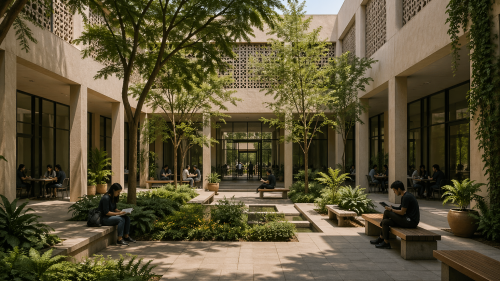
At our recent Cave gathering, we discussed the increasingly significant and challenging topic of how design can foster connection and a sense of belonging.
In times marked by growing isolation, displacement, and division—heightened by the bridges offered by the digital world—developing a sense of connection and belonging to a physical place or a community has become a rare and precious experience.
Designing for Connection
Feeling safe and appreciated in a particular environment is incredibly rewarding yet uncommon in busy streets, mass retail spaces, fast-paced workplaces, efficient care facilities, and high-performance learning environments. Yet, it is a need we crave for in our cozy homes and those familiar spots we return to with friends and family. The desire to connect and belong is a fundamental human longing, and research reveals it’s vital for mental health and a long life.

Creating spaces for connection means enabling people to gather, interact, and comfortably be together in both small and large groups. Designing for belonging, on the other hand, means shaping spaces, elements, and systems that naturally draw people in. As designers, we aim to understand what makes a place “sticky”; a place that invites people to linger and keeps them coming back. Here are some key insights that emerged during our discussion:
Identity
To create a sense of belonging, design can reflect collective imagery that fosters attachment and bonding. In our residences, we incorporate personal decor and ambiance that reflect our identities, making us feel “at home.” Architects, too, often integrate local history to build a shared civic identity, helping communities feel more deeply bonded to place and culture. In our discussion, we raised the question to one of our Texas-based participants about how a city like Austin, with a complex and also dark history, creates a sense of identity. He pointed out the city’s efforts to rebrand itself as a music capital, seen in everything from murals celebrating musical heritage to parks designed for public music events. The city picked an identity that everyone could relate to. However, meaningful inclusivity at the urban level must move beyond surface-level branding, demanding political commitment to reducing inequity and elevating the representation and agency of marginalized communities.
Inclusivity
Belonging can also mean designing open and welcoming spaces for everyone. In a cultural sense, this may involve avoiding symbols linked to specific ideologies, while in a functional sense, it includes designing spaces for both physical and mental accessibility. Ideal urban designs cater to diverse groups of people, from children to seniors, creating inclusive environments where all can coexist. We agreed that engaging communities in urban transformation is essential to maintain balance over time, and to avoid belonging-stripping processes like gentrification and mass tourism.

Perception
Belonging is often rooted in personal perception. When we enter a space, we subconsciously gauge its atmosphere as welcoming or otherwise. For some, a sense of welcome is a blend of pleasing elements and affordances; that is, spaces that bear signs of use, inviting interaction and exploration. But as we discovered during our group discussion, that isn’t true for all. We found ourselves comparing what truly makes a place feel welcoming: Is it neutrality, diversity, or the result of our personal connections? The role of participation emerged as a potential answer, linking our sense of belonging to our engagement with a place.
Participation
Thinking of belonging through participation opened new perspectives. Co-designing spaces and engaging in co-building efforts are powerful ways to make people feel connected and invested in their environments. Participation also means designing spaces that invite active engagement from the end-users, like the possibility of hosting events or community harvesting initiatives.
In closing, we touched upon another lingering question: How can we measure belonging? A participant suggested storytelling as a possible tool.
As we continue our exploration, it seems clear that design must foster environments where people feel safe, engaged, and welcomed.
Join us at the next Cave to continue exploring the intersection of design, people and wellbeing!