This week at The Cave, we explored the profound themes of creativity and expression, uncovering their deep ties to vitality and the human experience.
A Human Need
We began by framing creativity and expression as fundamental human needs, essential to life itself. Creativity, we discussed, manifests in countless forms—art, music, cooking, planning, or any activity that involves shaping or transforming. To create is to be alive. As someone in our group pointed out, there’s a danger in becoming passive consumers instead of active creators. That’s a shift that threatens our very sense of aliveness.
The conversation then turned to the spaces where we feel most creative. Art spaces like museums and workshops, places of movement such as dance or yoga studios, and natural environments emerged as common sources of inspiration.
A Bodily Experience
This led us to examine the relationship between creativity and bodily experience. Cold, boxy spaces or rigid environments that confine the body to limited postures, we noted, can stifle creativity. Inversely, trying something unfamiliar—whether adopting a new posture or embarking on a bold artistic endeavor—may feel uncomfortable but often unlocks creativity. Spaces that foster and express movement invite our bodies to be felt, encouraging free motion and setting new mental pathways in motion.

We envisioned an architecture that boldly embraces curves, colors, and dynamic shapes, complemented by furniture designed to support varied postures—from lounging on the floor to reclining comfortably. Higher, light-filled ceilings, playful uses of color, the integration of nature, asymmetry, and multisensory design were identified as key elements to encourage creativity. Diversity and variation, we agreed, are vital.
Nudging
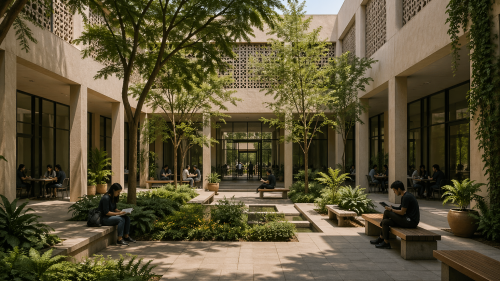
As one of the participants noted, even small subtle gestures can make a significant impact. A multipostural chair, a single vibrant pop of color, or a small courtyard with plants can subtly nudge us toward embracing the unfamiliar and rediscovering what feels alive within us. More importantly, these small, intentional changes are often more feasible to integrate into everyday design than grand, bold environments.
The Role of Research
Finally, we reflected on the role of research in validating the power of creative spaces. While lab experiments can highlight connections between design elements and psychological or physiological changes, the ultimate success of a space depends on a designer’s vision. Coherence and intentionality—placing the right elements in the right places—create balance and inspiration, helping us embody the mindset of a creator. Future research could focus on beautifully balanced environments, studying the effects of real spaces rather than isolated design qualities, and offering scientific insights that honor the artistry of design.
Creativity and expression are at the heart of what makes us feel alive, and the spaces we inhabit play a profound role in shaping these experiences. Through intentional design, we can create environments that invite movement, inspire exploration, and nurture the balance between stimulation and rest that fuels creativity.

I am excited to embrace the potential of design to reconnect us with our creative essence and to spark the vitality that drives us forward. Join me at the next Cave!