

Introduction
Cities are like living entities and are organismic in their form and function.1 Academic discourses in urban planning and urban sociology have long drawn analogies from human biology and natural organisms in studying cities as complex living beings.2,3 Ontologically, cities have been investigated in their structure and growth through the lens of systemic existence wherein each element though bearing autonomy but simultaneously are integrated into a connected whole.4-6 But cities are socially constructed, essentially because human presence, activities, mobilities, and interactions are fundamental to thriving and sustenance of cities.7 Construction of real estate and built-up environment is not what makes a city, but they are its people and communities who turn ordinary spaces into meaningful, active, and welcoming places. It is by synergizing the physical spaces with human essence, lived experiences of its inhabitants, tying the tangible artefacts and intangible socio-facts and menti-facts that allows cities to survive and bestow it a distinct identity. This is explored under the conceptual framework of placemaking in urban studies, planning and design.
Significance of Placemaking towards Belonging
Placemaking is a deeply embedded and participatory process where social, ritualistic, and cultural practices transform physical spaces into areas with strong collective identities. Placemaking is integral to safeguarding and diffusion of cultural practices and heritage, and, herein lies the power that communities hold in shaping urban spaces, creating a unique, vibrant, and resilient urban landscape.8 Morphologically cities develop through agglomerative tendencies over its landscape, nature of land uses and nexus of people-centric intentional or motivated interactions.
The processes of placemaking unfolding in the Indian metropolises is insightful as it is characteristically complex and organic yet it is used as a preferential quotidian tool in spatio-cultural planning by municipal governments and communities.9 It is relatively faster and cheaper process of intervention which localities are initiating in solving public space related problems, deriving wellbeing, building social connections and coherence.10 City spaces gradually develop prominent defining characters through imprints of myriad social lives interlacing physical environments whereby people co-create strong emotional attachments with the places they live, work and play in. This people-place relationship building constitutes a significant social phenomenon which deeply influences the sense of belonging, community symbolism and experiential aspects of public life.7 In this background, there is need to underline significant placemaking processes which are occurring in prominent urban areas as they stand as evidences that placemaking strategies are effective in translating abstract urban theories into actionable proven strategies for building social cohesion and belonging.
Methodology
This article uses narrative review and descriptive qualitative content analysis of the available published literature to position the megacity of Kolkata as a case study in comprehending how the social fabric of the city is woven by shared identity and belonging by various placemaking processes unfolding there. The analysis comprised of critically evaluating research articles in peer-reviewed journals and book chapters, reports by policy think-tanks, newspaper reports and grey literature on organizational websites of research institutes and cultural magazine portfolios.
A comprehensive search strategy was used where search was performed by typing specific keywords using electronic databases, including Google Scholar. Set of key words, phrases and their combinations such as ‘placemaking in Kolkata city’, ‘belonging and identity’, ‘community’, ‘collective’, ‘neighbourhoods’, ‘colonial history’, ‘urbanism’, ‘cultural ideology’ were systematically fed into the search engine, and the English language content relevant to the article theme were retrieved. Thereafter, content analysis was done for extracting themes which underscore the urbanism practices, lived experiences and socio-cultural transformations which garner distinctiveness to Kolkata city as a case study in placemaking.
Discussion
Historical and Cultural Evolution of Kolkata: The City of Joy
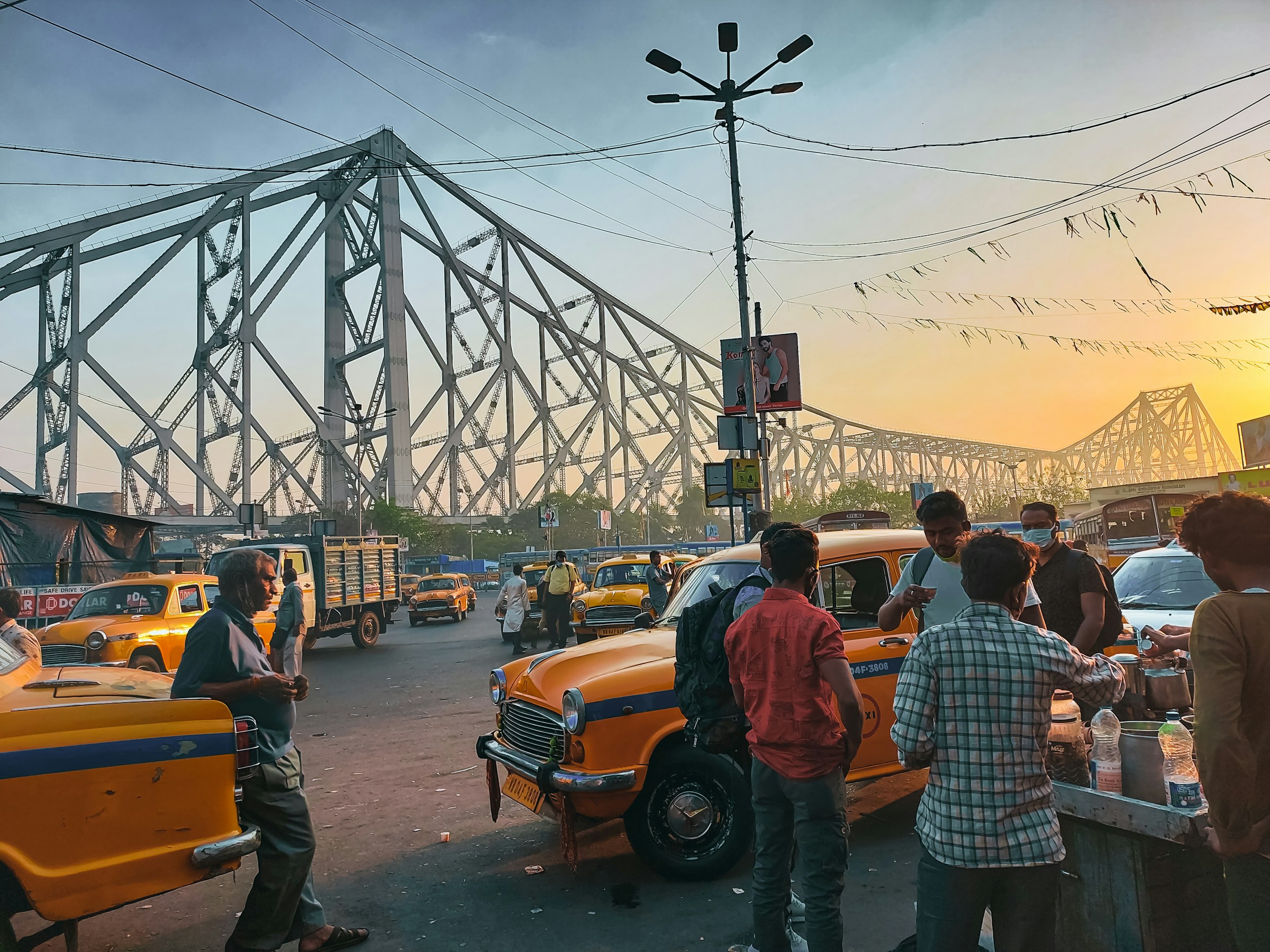
Kolkata or erstwhile Calcutta, a megacity in eastern part of India has witnessed waves of transition throughout its historical and modern existence. The three villages of the Sutanuti, Govindapur, and Kalikata were bought by the erstwhile East India Company of Great Britain from the local landlords and settled in envisioning a lucrative riverine location in the 17th century. With more than 330 years of evolution,11 the city’s neighbourhoods have stood the test of time carefully preserving and nurturing the superstructure of the urbane yet diverse assemblies of ethnic and cultural ethos. Kolkata’s urban metabolism has adapted itself through the economic, social, political and technological tides of change by the stronghold of community cultural practices which its streets and alleys continue to bear testimonies. The architectural grandeur of the colonial past, layered with the modern mansions, ornamented boulevards, green parks and narrow chaotic gulleys of the ‘bazaar’ and its multi-ethnic population are the true custodians of the city.
Essentially the city of Kolkata in the 21st century is holding up its historical legacies and traditional urbanism entwined with modernity and radical philosophies. This duality of ideologies, this conflict between the past and the present somehow manage to amalgamate into how its citizens have been designing, using, caring for and meaning making with the city’s public spaces. There is a strong locality and neighbourhood effect which broadly distinguishes the persona of the traditional and older historic buildings in the northern and central parts of the city with the more affluent, broad pedestrian sidewalks, sophisticated real estate complexes with manicured gardens and gated communities conspicuous in the newer expanse of the southern and eastern parts of Kolkata. North and central city areas have older architectural buildings, designed as per colonial, Anglican style heritage structures with wide verandas and balconies, porticoes with narrow alleyways, traditional shop-house structures close to street edges, densely populated mixed land-use of residential intermingled with commercial, recreational and public spaces.12
Kolkata which is informally recognized as the ‘Cultural Capital of India’ represents the vibrant and effulgent melting pot of social groups who have called the city home.13 Clusters of immigrant Chinese, Armenian, Jewish, Parsi, European (Dutch, French), Tibetian communities alongside the multi-lingual working-class migrant population from rest of India (predominantly Biharis, Odiyas, North-Eastern Indians, Nepalis, Marwaris, Tamilians, Punjabis) apart from the British and native Bengali ‘Bhadraloks’ (well-educated class) have epoch marked the city’s urbanism.14,15 Localities especially the low-income residential pockets and informal settlements or slums in Kolkata are named after the dominant residential caste by occupation and suffixes such as ‘bustee’, ‘pally’, ‘potti’ ‘bagan’ ‘para’, ‘bazaar’ ‘nagar’, etc are used in the names since colonial times, which refer to demarcated ghettos within neighbourhoods.12 Furthermore, localities (e.g. Dalhousie, Canning, Esplanade, Hastings) and streets (e.g. Netaji, Vivekananda, Mahatma Gandhi) took to the names of prominent luminaries giving us a glimpse of the city’s history. The city outgrowths have expanded along transport corridors in a dense compact alignment. The outskirts in the southern end namely localities of Bijoygarh, Garia, Bikramgarh, Netaji Nagar, Bagha Jatin Colony were primarily used to rehabilitate refugee populations from now Bangladesh since the partition in 1970s.16-18
From experiencing identity crisis, trauma from mass displacement and alienation, survival struggles in a new territory, feelings of estrangement from homeland to ultimately integrating and contributing into the city’s economy these communities have found their place and space in Kolkata via ethnic placemaking. The psyche of the city has thus imbibed this pluralistic, cosmopolitan and multicultural character from its numerous micro-communities coexisting in an inclusive environment. Each community, across all the social classes are navigating their ‘right to the city’ in their own ways of social production.19
Placemaking for Community Participation and Social Connection
At the heart of Kolkata’s social life ‘para’ (micro spatial units or hyper-localities demarcated by inhabitants) and ‘adda’ (informal social interaction dominated by passionate discussion on intellectually stimulating topics) are inseparable abstract concepts which have a generational significance and sublime charm. Residents of any ‘para’ strongly identify with and defend their spatial territories, have riveting sense of belonging manifested by volunteering in involvement and management of neighbourhood social infrastructure such as community hangout spots, parks, libraries and clubs, competing with other ‘paras’ in inter-city cultural activities and even acting as surveillance against local crimes.20 These urban social units continue to enthrall the city where people feel associated with their communities, take pride in sharing collective identity, stand beside and support each other during times of needs, perform community policing activities and at the foremost instill belonging.
Facets of tactical urbanism and strategic placemaking are found in nooks and corners of the city, which stand out depicting the personality of the neighborhood.21 Residents, especially the youth, can be seen playing group sports such as ‘gully cricket’ or ‘football’ and ‘carrom board games’ on holidays by blocking low-speed through fares. At the crossroads of Gariahat locality in South Kolkata, the open space below the flyover has been taken over by an enthusiastic chess club finding patronage in players and spectators amidst the chaos of the traffic.22 This is a classic instance of solving the space crunch problem via prudent utilization of abandoned yet centripetal space for community building. The makeshift shacks of street vendors hawking along arterial roads such as in localities of Gariahat, Hatibagan, New Market, wholesale depots at Burrabazaar, affordable electronics and metal-ware shops in Chadni Chowk markets have etched out strong consumer consciousness.23 These ‘bazaars’ cater to merchants and traders not only to earn their livelihoods, but also turn into places of negotiations, networking and relationship with the city. 24-26
Co-creating Belonging through Art
The community engagement is a scene to behold at festivals and religious gatherings where in the entire neighbourhoods across the length and breadth of the city is enamoured by art and creative spirit. In a recent international recognition as intangible cultural heritage of humanity by UNESCO in 2021 to the majestic Hindu festival of ‘Durga Puja’ (worship of Goddess) celebrated annually, this very indomitable vibe and inspirational competence of community living is revered as significant.27-28 This annual religious affair is one of the largest community-led public art festivals in the world which has been attracting tourists (more than 3.1 million international visitors in 2024) for its socially engaging themes by artisans, immersive community spirit in celebrating traditional rituals transcending social divisions and promoting shared responsibility.29 Street closures for pandals or temporary art installations are found to restrict vehicle use, accelerate pedestrian walkability, boost local economy during the festival days.
City streets in Kolkata are reputed for being canvases for visual and performative art and sites for presenting dissent and protests by the body politic in the public sphere. Examples of tactical placemaking can be cited from the Covid-19 pandemic to educate the masses against health myths and stigma,30 to decorative street art for Hindu religious festivals and revival of street theatre performances by youth raising voices against gender discrimination, public space safety and for other social activism causes.31
Transformations of desolated dingy by-lanes, boundary walls and building facades into aesthetic walls of artistry and immersive murals are dotted across the city corridors which reflect the everyday way of life, memories of bygone eras and subtle cultural elements that bind the communities in belongingness.32 Affective placemaking has been spontaneous and dynamic in carving sentimental values out of everyday social actions of leisure activities among Kolkata residents. Making room for food festivals, music concerts, seasonal fairs, religious rituals and sports have helped communities to uphold and celebrate the nostalgia and oral histories of their culture. The annually held Kolkata book fair is Asia’s largest non-trade book fair, 33 and the book market in College Street (locally called Boi Para or Book Town) in North Kolkata is touted to be the world’s largest book market.34 The 2026 fair recorded highest ever footfall of 32 lakh people with approximately Rs 27 crores of book sales.35 These legendary places are cultural landmarks and veritable literary havens for the educated and have shaped the city’s image and its citizens’ reputation for being informed, intellectual, argumentative and vocal.
Urban Design Planning by Urban Local Bodies
The Kolkata Municipal Corporation (KMC) has been instrumental in designing inclusive neighbourhood engagement spots for social interaction by installing newspaper stands, street furniture like shaded benches, bus stops sitting areas, refurbishing staircases of old North Kolkata structures locally called rok (sitting platforms), ornamental street lightings and water fountains, allotting for and beautifying public parks and public toilets and naming them ‘seniors citizens’ or ‘children’s’ or ‘women’s’ park, to name a few. The Kolkata Illumination Project by a citizens’ group have started crowdsourced citizen-led endeavours to light up the neo-classical and Gothic style heritage structures across the city, improving night time visibility, enhancing public safety and attracting tourism.36 The KMC managed ‘cultural gathering spaces’ namely emporiums, cinema theatres, amusement parks such as Dakshinapan, Nandan, Millenium Park are popular hangouts frequented by the middle and upper middle class Kolkatans.37 The PRONAM initiative by Kolkata Police Department has extended social care and security to older adults in the city implemented through welfare visits, life and wealth safeguarding, legal and medical assistance, emergency help has addressed social isolation among the older population.38
Repurposing vintage public transport for placemaking is another idea which has caught the citizens’ imagination. Some non-governmental organizations have innovated in using bus fleets as mobile schools for underprivileged street children,39 whereas with the trams being slowly phased out of Kolkata transport map, the trams, depots and terminals are retrofitted by the municipal authorities and private players serving as museums, bookstores and cafes.40,41
The city emanates magnificence and timelessness which transcends into everyday conversations, its food culture, religious institutions, museums, art galleries, river Hooghly waterfront among others. Distinctively, the city has been witnessing a momentum of creative placemaking via a surge of gentrification of older bungalows and mansions into boutiques, shops, trendy cafes and restaurants, revitalizing heritage buildings with museums and public utilities which has attracted footfalls and interest from the youth and urban crowd.42-45 Municipal laws have been made flexible to allow adaptive reuse of buildings which will uphold cultural nostalgia, generate commercial uses, upkeep architectural value along with structural safety, all aimed towards sustainable urban redevelopment.46,47 The numerous heritage and food walks conducted in Kolkata in recent decades are capturing the rich tapestry of the city through storytelling, exploring and experiential learning.48,49 Newer generations are rediscovering their city’s history and reviving connections to their cultural roots through art and creative endeavours and thus are encouraged to participate in preserving and safeguarding heritage.50
Kolkata as a Replicability Model for Best Practices in Urbanism
It can be opined that these vivid themes of urbanism experiences of Kolkata positions the city as a conceptual model of socially embedded placemaking. Other urban areas can adapt its key principles which include prioritizing human-scale interactions, enabling cultural expression in space, supporting community agency and embracing flexibility and informality as contextual themes in placemaking.
Cities can intentionally design or preserve low-cost, accessible micro public spaces that encourage spontaneous interaction among citizens. Furthermore, other cities can promote neighbourhood level governance and hyperlocal identity-building, empowering residents to co-create and manage shared spaces. But this must not be confused with more restrictive diktats of the usual residential welfare associations (RWAs). Urban planners can collaborate with local communities to embed cultural calendars (festivals, rituals) into spatial planning, allowing temporary but recurring transformations of public space that strengthen social ties. These cultural anchors can encourage collective cocreation among residents and facilitate building ownership and long-term stewardships for community resources. Moreover, urban local bodies of cities must promote urban designing for multi-functionality, temporal and optimal use so that spaces are allowed to evolve with community needs instead of remaining static. Cities can learn to leverage local narratives, heritage, and storytelling to deepen emotional connections between people and place.
Conclusion
These diverse ways of placemaking in Kolkata is challenging the trends of exclusionary urbanism and segregation influenced by globalization and is driving the ‘community coproduction of public spaces for communal life.’51 The intricate mesh of ‘para’ and ‘adda’ culture which gives the city her soul, dynamics of placemaking and place-keeping, presence of various racial-ethnic communities and enclaves, socio-cultural pluriversality continue to cultivate social cohesiveness, acculturation, mutual interdependence and community solidarity in Kolkata.
References
1. Hillel O, Gervasi M. Cities as global organisms. In: Elmqvist T, Bai X, Frantzeskaki N, et al., eds. Urban Planet: Knowledge towards Sustainable Cities. Cambridge University Press, UK; 2018:384-385.
2. Kirwan C, Zhiyong Fu. Chapter 2 – City as living organism. In: Kirwan C, Fu Z, eds. Smart Cities and Artificial Intelligence, Elsevier; 2020: 25-45. https://doi.org/10.1016/B978-0-12-817024-3.00002-7
3. van den Dobbelsteen A, Keeffe G, Tillie N, Roggema R. (2012). Cities as organisms. In: Roggema R, ed. Swarming Landscapes. Advances in Global Change Research, vol 48. Springer, Dordrecht; 2012. https://doi.org/10.1007/978-94-007-4378-6_9
4. Gottdiener M, Budd L. Models of urban growth. In: Models of urban growth. SAGE Publications Ltd; 2005: 84-86. https://doi.org/10.4135/9781446279120.n20
5. Liu L, Palaiologou F, Schmidt-III R. Green infrastructure morphology: Integrating urban morphological perspectives for sustainable urban development. Journal of Urban Management. 2025; 14(4):1231-1252, https://doi.org/10.1016/j.jum.2025.05.004
6. Pacione M. (2001). Models of urban land use structure in cities of the developed world. Geography. 2001; 86(2):97–119. https://doi.org/10.1080/20436564.2001.12219788
7. Azarian R. Social construction of places as meaningful objects: A symbolic interactionist approach. International Review of Sociology. 2023; 33(3):546–564. https://doi.org/10.1080/03906701.2023.2259060
8. Istoriou T, Pozoukidou G. Understanding placemaking in the context of spatial planning: Insights from a literature review. Journal of Urbanism: International Research on Placemaking and Urban Sustainability. 2024; 1–18. https://doi.org/10.1080/17549175.2024.2415632
9. te Lintelo DJH, Hermmersam P. Displaceability, placemaking and urban wellbeing. Wellbeing, Space and Society. 2024; 7, 100229, https://doi.org/10.1016/j.wss.2024.100229
10. Stamenkov I, Dokov H. (2023). The role of placemaking and tactical urbanism for promoting active cities: Analysing experts’ perceptions. Activities in Physical Environment and Sports. 2023; 13(2):30-36. DOI: 10.46705/APES2313230s
11. Dalrymple W. The Epic City review – a love letter to Kolkata. The Guardian. August 27, 2017. https://www.theguardian.com/books/2017/aug/27/the-epic-city-world-on-the-streets-of-calcutta-kushanava-choudhury-review
12. Roy S. Dynamics of paid domestic work among women in Kolkata. [PhD thesis]. New Delhi, India: Jawaharlal Nehru University; 2017.
13. The Times of India. Kolkata chronicles: A day in the cultural capital. The Times of India. May 24, 2025. http://timesofindia.indiatimes.com/articleshow/121342078.cms?utm_source=contentofinterest&utm_medium=text&utm_campaign=cppst
14. Roy K. Preservation of identity through ethnic place-making: A study on the Chinese community of Kolkata, India. Fudan J. Hum. Soc. Sci. 2025; 18:539–583. https://doi.org/10.1007/s40647-024-00428-x
15. Lentin, S. Exploring Calcutta’s multi-ethnicities. Gateway House: Indian Council on Global Relations. February 25, 2016. Accessed February 20, 2026. https://www.gatewayhouse.in/tea-tangra-exploring-calcuttas-multi-ethnicities/
16. Bhattacharya I. Kolkata and partition: Between remembering and forgetting. JSTOR Daily. August 10, 2022. Accessed February 13, 2026. https://daily.jstor.org/kolkata-and-partition-between-remembering-and-forgetting/
17. Bhattacharya S. Chronicling resettlement. Kolkata Partition Museum. 2019. Accessed February 22, 2026. https://kolkata-partition-museum.org/chronicling-resettlement/
18. Hassan M, Samsujjan MD. Refugee rehabilitation: A study of Bengali migrants in post-partition India. IOSR Journal of Humanities and Social Science. 2025; 30(9). https://www.iosrjournals.org/iosr-jhss/papers/Vol.30-Issue9/Ser-3/A3009030105.pdf
19. Lefebvre, H. The Right to the City. In: Writings on cities. Oxford, UK: Blackwell; 1996 pp. 147-159. (Originally Published as Le droit à la ville. Paris: Anthropos, 1968)
20. Dasgupta S, Tyagi M. Para, Adda and residents of Kolkata: Need for design of new neighbourhoods accommodating cultural legacies In: Chakrabarti, A. et al. eds. Design for Tomorrow—Volume 1, Smart Innovation, Systems and Technologies, 2021, 221; 279-290. https://doi.org/10.1007/978-981-16-0041-8_24
21. Gupta S. Tactical urbanism for a new urban India: An experimental, incremental and participatory approach to designing cities. Journal of the Indian Institute of Architects. 2019; October: 29-35. https://www.academia.edu/42848502/Tactical_Urbanism_for_a_New_Urban_India_An_experimental_incremental_and_participatory_approach_to_designing_cities
22. NDTV. Kolkata’s street chess flourishes under busy flyover. NDTV. 20 June 20, 2012. https://www.ndtv.com/kolkata-news/kolkatas-street-chess-flourishes-under-busy-flyover-489083
23. The Times of India. After 3 phases, survey finds 55k hawkers in Kolkata. The Times of India. August 18, 2024. https://timesofindia.indiatimes.com/city/kolkata/hawker-survey-in-kolkata-identifies-55000-street-vendors/articleshow/112598610.cms
24. Bandyopadhyay, R. Institutionalizing informality: The hawkers’ question in post-colonial Calcutta. Modern Asian Studies. 2016; 50 (2):675-717. https://www.jstor.org/stable/24734800
25. Bandyopadhyay R. Archiving from below: The case of the mobilised hawkers in Calcutta. Sociological Research Online. 2017; 14(5):27-37. https://doi.org/10.5153/sro.2008 (Original work published 2009)
26. Lahiri K. Formal organising in the informal sector: The Hawker Sangram Committee and the politics of hawking in Kolkata, India. Global Labour Journal. 2022; 13(1):61-79. DOI: https://doi.org/10.15173/glj.v13i1.4412
27. Sharma A, Upadhyay R. India’s Durga Puja, where worship meets social change. UN News. October 4, 2025. Accessed February 15, 2026. https://news.un.org/en/story/2025/10/1166032
28. Durga Puja inscribed on the UNESCO Representative List of the Intangible Cultural Heritage of Humanity. UNESCO. December 15, 2021. Accessed February 10, 2026. https://www.unesco.org/en/articles/durga-puja-inscribed-unesco-representative-list-intangible-cultural-heritage-humanity
29. The Times of India. Bengal goes global: How Durga Puja redrew the map of international attention. The Times of India. December 13, 2025. https://timesofindia.indiatimes.com/city/kolkata/bengal-goes-global-how-durga-puja-redrew-the-map-of-international-attention/articleshow/125942633.cms
30. 30. NDTV. Street plays in Kolkata fight COVID-19 stigma, myths. NDTV. September 6, 2020. https://www.ndtv.com/india-news/coronavirus-street-plays-in-kolkata-fight-covid-19-stigma-myths-2291313
31. Paul A, Roy T, Mondal S, Biswas S. Reclaiming public spaces in post-pandemic India (Kolkata): Activist theatre, gender and a resurgence of the marginal. Theatre Research International. 2024; 49(1):111-117. doi:10.1017/S0307883323000421
32. The Telegraph. In pictures: Kolkata’s Colour Corridor — a living gallery of memory and vibrancy. The Telegraph. January 3, 2026. https://www.telegraphindia.com/my-kolkata/places/in-pictures-kolkatas-colour-corridor-in-ballygunge-photogallery/cid/2140869?slide=1
33. The Times of India. 10L visitors in first 3 days: Book fair sets new opening record. The Times of India. January 26, 2026. https://timesofindia.indiatimes.com/city/kolkata/10l-visitors-in-first-3-days-book-fair-sets-new-opening-record/articleshow/127492744.cms
34. The Times of India. Boi Para College Street. The heart of Kolkata’s literary and cultural heritage. The Times of India. April 20, 2025. https://timesofindia.indiatimes.com/city/kolkata/boi-para-college-street-the-heart-of-kolkatas-literary-and-cultural-heritage/articleshow/120449497.cms
35. The Times of India. Book fair footfall highest ever, sales up 15% over ’24. The Times of India. February 4, 2026. https://timesofindia.indiatimes.com/city/kolkata/book-fair-footfall-highest-ever-sales-up-15-over-24/articleshow/127892454.cms
36. Roy S. The Indian city that sparkles like Paris at night. BBC. September 13, 2025. https://www.bbc.com/news/articles/c14704vj4r2o
37. Roy S, Bailey A. Safe in the city? Negotiating safety, public space and the male gaze in Kolkata, India. Cities. 2021; 117, 103321, https://doi.org/10.1016/j.cities.2021.103321
38. The Economic Times. Living alone at 60+? How Kolkata police’s PRONAM protects seniors’ safety and savings; what Delhi, Mumbai and other cities are doing. The Economic Times. January 30, 2026. https://economictimes.indiatimes.com/wealth/plan/living-alone-at-60-how-kolkata-polices-pronam-protects-seniors-safety-and-savings-what-delhi-mumbai-other-cities-are-doing/living-alone-at-60-why-safety-is-also-a-financial-issue/slideshow/127793426.cms
39. What happens when street children cannot attend school? The school comes to them in a bus! The Better India. December 29, 2019. Accessed February 12, 2026. https://thebetterindia.com/14013/school-wheels-education-street-children-aspirations-kolkata-mukti-gupta/
40. ABP News Bureau. Restaurant, bookstore, museum: Kolkata tram coaches could be transformed into these theme-based setups. ABP. September 25, 2025. https://news.abplive.com/cities/kolkata-tram-to-be-discontinued-transformation-ideas-restaurant-bookstore-museum-1719961
41. The Telegraph. Modern meets vintage at Tram World Cafe inside Gariahat Tram Depot. The Telegraph. January 23, 2023. https://www.telegraphindia.com/my-kolkata/food/tram-world-cafe-inside-gariahat-tram-depot-at-ballygunge-is-a-spot-for-kolkatans-of-all-generations-to-bond-over-trams-books-and-food/cid/1911663
42. The Telegraph. These Kolkata cafes housed in heritage buildings, serve food, drinks and a side of history. The Telegraph. February 2, 2025. https://www.telegraphindia.com/my-kolkata/food/these-kolkata-cafes-housed-in-heritage-buildings-serve-food-drinks-and-a-side-of-history/cid/2135856#goog_rewarded
43. The people turning Kolkata’s past into present cool. Conde Nast Traveller. December 15, 2023. Accessed February 20, 2026. https://www.cntraveller.in/story/kolkata-people-heritage-building-design-cafes-art-restaurants/
44. The new generation of entrepreneurs giving Kolkata’s heritage buildings a fresh start. Conde Nast Traveller. May 6, 2024. Accessed February 21, 2026. https://www.cntraveler.com/story/the-new-generation-giving-kolkatas-heritage-buildings-a-fresh-start
45. The Times of India. Café culture & the city. The Times of India. July 25, 2023. https://timesofindia.indiatimes.com/city/kolkata/cafe-culture-the-city/articleshow/102095949.cms
46. The Indian Express. Kolkata Corporation drafts rules for uniform standards for conservation, management of heritage structures in city. The Indian Express. May 17, 2025. https://indianexpress.com/article/cities/kolkata/kolkata-corporation-drafts-uniform-standards-conservation-heritage-10012128/
47. The Times of India. KMC looks at redoing heritage rules for better conservation. The Times of India. November 25, 2025. https://timesofindia.indiatimes.com/city/kolkata/kolkata-municipal-corporation-revamps-heritage-conservation methodology/articleshow/115665632.cms
48. The Times of India. Kolkatans discover their roots, take tours of city’s heritage, community, food landscape. The Times of India. November 25, 2023. https://timesofindia.indiatimes.com/city/kolkata/kolkatans-rediscover-their-roots-take-tours-of-citys-heritage-community-food-landscape/articleshow/105486709.cms
49. The Times of India. Captivating heritage walk unveils Kolkata’s rich tapestry to students. The Times of India. March 15, 2024. https://timesofindia.indiatimes.com/city/kolkata/captivating-heritage-walk-unveils-kolkatas-rich-tapestry-to-students/articleshow/108523584.cms
50. Thurber A, Christiano J. Confronting gentrification: Can creative interventions help people keep more than just their homes? Engaged Scholar Community Journal. 2019; 5(2):95. DOI: 10.15402/esj.v5i2.68338
51. Barry J, Agyeman J. On belonging and becoming in the settler-colonial city: Co-produced futurities, placemaking, and urban planning in the United States. Journal of Race, Ethnicity and the City. 2020; 1(1–2):22–41. https://doi.org/10.1080/26884674.2020.1793703