

Rapid urbanization has become one of the most threatening progressions of the twenty-first century. Cities, the hotspot of such urbanization consume a disproportionately large share of resources, while simultaneously concentrating opportunities and challenges alike. As cities become denser, the urban commons including parks, streets, lakes, open spaces, and other shared environments—face increasing pressures of flawed authority and neglect. These spaces, though essential to collective urban life, are often treated as residual or secondary to economic development.
Technological developments and policy reforms by themselves cannot ensure sustainable urban environments, equal access to urban commons and citizen wellbeing. They require a primary shift in perception of how urban commons are conceived, governed, maintained, and experienced. Top-down models of making decisions with expert advice has so far been considered for conventional urban planning. While such approaches have enabled large-scale infrastructure development, they often fail to account for the urban commons accounting for lived experience and everyday socio-spatial practices.1,2 As a result, many top-down initiatives struggle with limited adoption, social resistance, or unintended consequences. In response, co-creation has gained prominence as an alternative approach emphasizing collaboration between stakeholders in shaping urban change. Reframing the urban commons as shared civic infrastructures demands participatory stewardship and a renewed understanding of these spaces as lived, relational environments rather than merely physical assets.
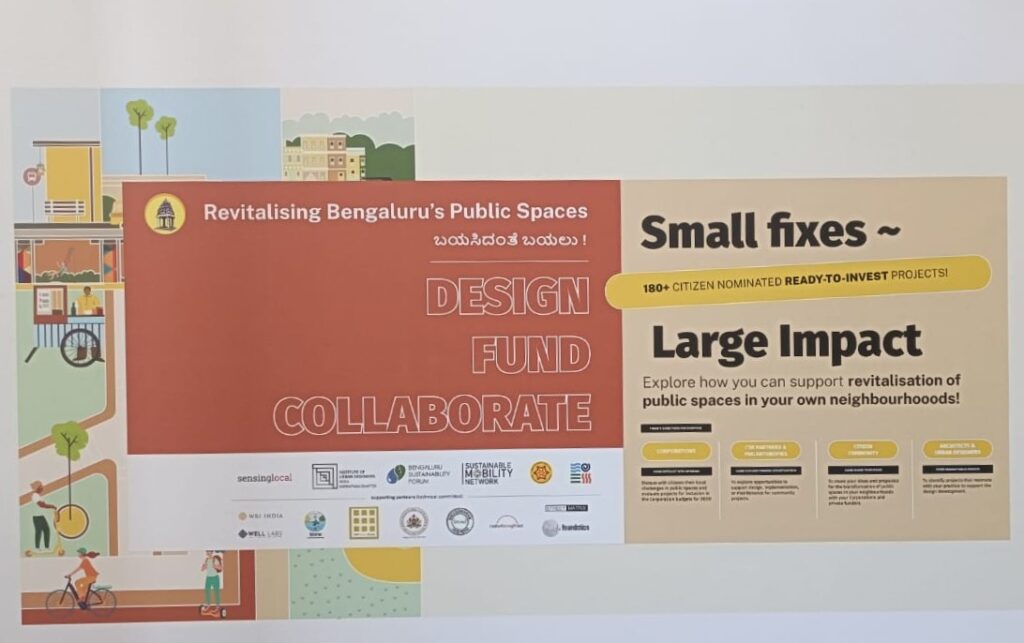
Co-creation reframes citizens not as passive beneficiaries of policy and governance, but as active participants in shaping urban transitions. Through everyday practices, political engagement, and collective action, residents continuously influence the evolution of the urban fabric.3 In the context of urban commons, this perspective recognizes that shared spaces like parks, streets, lakes, and open areas are not solely the responsibility of municipal authorities but also of the communities that inhabit and use them. Sustainable cities therefore emerge through shared stewardship, where governance is distributed between institutions and citizens. This article examines how co-creation contributes to the making of sustainable urban commons by addressing three interrelated questions: What does it mean to co-create sustainable cities through urban commons?, How do citizens contribute to transitions within the urban fabric? And what social, political and institutional conditions enable or constrain co-creation?
Co-Creating urban commons
Urban commons in the city are not simply shared physical spaces; they are collectively produced environments sustained through complex continuous social relations.4 The idea of ‘commons’ has increasingly entered urban discourse describing public spaces, community gardens, informal markets, and waterbodies that are collectively used and cared for. Urban commons are therefore relational infrastructures, with public spaces thriving when people feel invested in them. In this sense, co-creation is both a design methodology and a social practice.
Co-creating urban commons shifts the focus from delivery expected from the top-down approach to a more collaborative approach. Rather than spaces being designed, implemented, and managed solely by civic authorities or developers, they emerge through multi-layered dialogues, negotiation, contribution, and shared responsibility with citizens. Co-creation thus reframes citizens as co-authors of space, challenging existing dominant development models.
These contemporary models often prioritizes efficiency, branding, and economic return. However,in contrast, co-created commons foreground care, collective memory, and everyday interaction.5 They resist purely extractive authority by embedding stewardship within community networks. Importantly, co-creation does not imply the absence of institutional actors but makes the basket of stakeholders of the city more comprehensive.
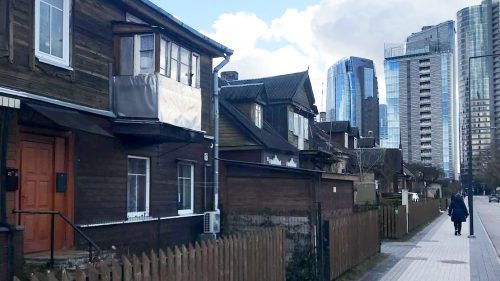
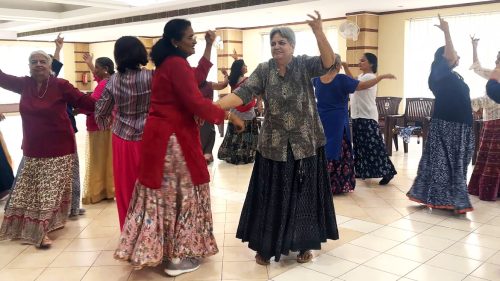
Ultimately, co-creating urban commons is about redefining the city as a shared project (as shown in figure 01). It recognizes that belonging is not produced by authority alone, but through collective engagement in shaping and sustaining space.5 In this way, urban commons become laboratories for democratic urbanism—spaces that are lived, negotiated, and cared for together.6
Citizen Agency, Community Stewardship and Belonging
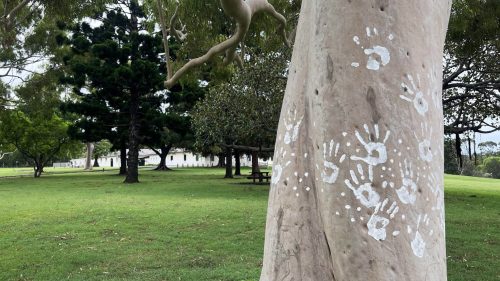
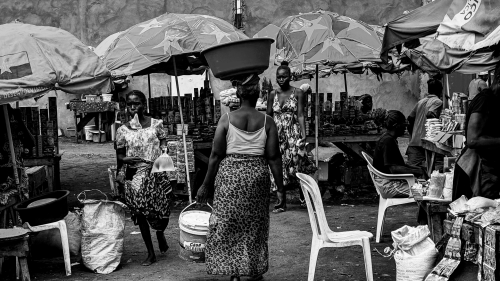
Citizen agency, community stewardship and belonging refers to the capacity of common individuals and groups to shape the environments they inhabit. In the urban contexts, this manifests through everyday practices (as shown in figure 02), collective organizing, political engagement, and participation in design processes. While planning discourse often treats residents as beneficiaries, recognizing citizens as co-decision-makers positions them as active contributors to urban transformation.
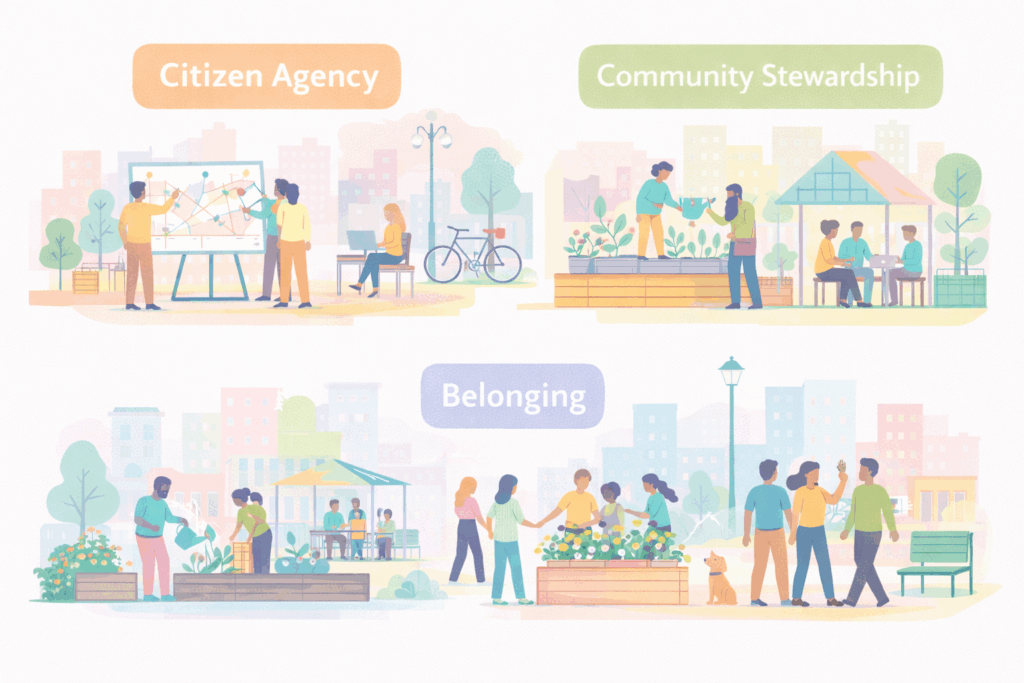
Citizen Agency becomes visible not only in moments of formal participation but also in routine decisions—how people use parks, maintain waterbodies, advocate for cycling and walking, or organize their neighbourhood clean-ups. These actions may appear negligible in isolation, yet collectively they influence the city’s socio-technical systems and spatial cultures.7 Community stewardship extends beyond usage; it implies responsibility. Stewardship involves caring for shared resources over time, mediating conflicts, and ensuring continuity. In co-created urban commons, stewardship becomes both emotional and practical action. Residents water plants, host events and monitor safety. These practices create a loop between care and attachment: the more one contributes, the stronger the sense of connection. Belonging, in this framework, is not a passive emotional state but an outcome of being present. Lefebvre’s notion of the “right to the city” emphasizes inhabitants’ right not only to access space but to shape it.8 People feel they belong when they recognize their imprint within a space—when their decisions, labour, or ideas are reflected in the environment. This experiential dimension is central to sustaining cities in the long run.
The relationship between agency, stewardship, and belonging also has democratic implications. This distinction is critical when examining how belonging emerges in cities. When citizens participate meaningfully in shaping space, trust in institutions can deepen. Transparent processes and shared decision-making cultivate mutual accountability between communities and authorities.9 Thus, belonging is inseparable from questions of power and recognition. Understanding this triad provides a more nuanced lens for urban sustainability.
Social, Political and Institutional framework
Cities occupy a unique position within multi-level governance systems with decisions on the urban commons inherently political. Compared to governments, the urban commons are closer to citizens and more attuned to local conditions. This proximity enables more responsive and pragmatic approaches to sustainability challenges.
Co-creation can be broadly understood as the involvement of citizens and other stakeholders in shaping sustainability transitions through both formal and informal means. Unlike conventional participation models, which often limit citizen input to feedback, co-creation emphasizes shared agency and responsibility. Two fundamental dimensions of co-creation can be identified.10 The first concerns the co-creation of city politics, which includes participation in policymaking, governance, and public debate.11 Citizens engage in this dimension through voting, public consultations, advocacy, and everyday political expression. These activities influence policy agendas, legitimize sustainability initiatives, and shape public discourse. The second dimension involves the co-creation of socio-technical systems.12 Citizens participate in this process through their everyday practices—such as choosing modes of transport, food consumption patterns, or energy use—and through more organized initiatives such as living labs, community energy projects, or citizen science. These forms of engagement directly affect how socio-technical systems evolve and how sustainable alternatives gain traction.13 Together, these dimensions highlight a broad understanding of co-creation that extends beyond formal participatory processes.
Of late few collaborative governance models, including public-private partnerships and citizen engagement platforms, have become increasingly common in cities seeking to advance sustainability goals. In some contexts, cities actively encourage citizen involvement in agenda-setting and experimentation. In others, participation is limited to implementation, with decision-making authority remaining centralized. These differences influence the scope and impact of co-creation. Moreover, collaborative arrangements can obscure power asymmetries.14 While partnerships promise inclusivity, they may privilege well-resourced actors or prioritize large scale development interests over more intimate social and environmental concerns related to urban commons in the city. Ensuring transparency, accountability, and democratic legitimacy remains a key challenge for co-creating sustainable cities.
Learnings from global case studies
A few examples from around the world illustrate the transformative potential of co-creating urban commons, offering deeper insight into how cities can move beyond consultation toward genuine shared stewardship. These cases demonstrate that when citizens are meaningfully involved in shaping, maintaining, and governing shared spaces, urban commons become more resilient, inclusive, and socially embedded.
The High Line – New York City, USA : The High Line in Manhattan exemplifies community-driven transformation of unused infrastructure into vibrant public space. Proposed by local residents and advocacy groups in the early 2000s, the High Line elevated park project involved extensive community engagement through multi-layered public interaction including public meetings, workshops, and participatory design charrettes.15 This collaborative process ensured that the park not only preserved historic infrastructure but reflected community desires for accessible green space, art, and public programming. Today, the park is widely cited as a successful example of sustainable urban regeneration that enhances biodiversity, walkability, and social interaction in a dense metropolis.16
Vauban – Freiburg, Germany : Vauban is a sustainable residential neighbourhood developed through extensive community participation. Residents were deeply involved in planning workshops, decision-making processes, and the design of shared spaces. The district prioritizes energy-efficient buildings along with extensive pedestrian and cycling infrastructure, car-free streets, and renewable energy systems. The participatory approach ensured that inhabitants became co-owners of their environment, fostering a strong sense of community and environmental stewardship.17 Vauban is studied internationally as a model of sustainable neighbourhood design shaped through collaborative processes.18
Superkilen – Copenhagen, Denmark : Superkilen is an urban park in Copenhagen designed through a collaborative process involving local residents, artists, and architects. Located in one of the city’s most culturally diverse districts, the project organized workshops where community members selected urban elements—such as benches, playground equipment, and art installations—reflecting their cultural identities.19 The resulting park functions as a social hub that celebrates diversity and fosters interactions among residents. Superkilen shows how co-creation can not only enhance sustainability through inclusive public space but also strengthen social cohesion in cosmopolitan cities.20
R-Urban – Paris, France : The R-Urban initiative exemplifies co-creative transformation of urban wastelands into resilient community systems. Initiated by the collective Atelier Architecture Autogérée, the project engaged local residents in urban agriculture (AgroCité), recycling (RecycLab), and cooperative housing (EcoHab). Local stakeholders collaborated with municipal authorities, students, and volunteers to design and build pilot projects that repurpose materials, support local food production, and nurture environmental education.21 R-Urban demonstrates how co-creation can produce sustainable, networked urban practices rooted in community involvement.22
Sanjaynagar Slum Redevelopment – Ahmednagar, India : This project illustrates participatory design within a redevelopment initiative under India’s Housing for All program. Residents were involved at every scale—from neighbourhood planning to customization of individual homes.23 The resulting design featured community courtyards, shaded walkways, and communal spaces prioritizing social interaction and environmental comfort. This case underscores the potential of co-creation in contexts with resource constraints and socio-economic diversity.24
Global “Healthy Corridors” – URBINAT (European Cities) : The URBINAT project, implemented in cities like Sofia (Bulgaria), Porto (Portugal), and Nantes (France), co-creates “healthy corridors”— linear green infrastructure linking neighbourhoods with nature-based solutions. These interventions integrate ecological restoration with participatory planning, social economy initiatives, and climate adaptation strategies. Citizen engagement helps shape the design and program of these corridors, enhancing environmental quality and community well-being. 25,26
These success stories demonstrate that co-created commons tend to foster stronger place attachment, improved maintenance, and heightened civic trust. More importantly, they show that sustainable urban development is not achieved solely through infrastructure investment, but through cultivating relationships between people and place. Examining these diverse examples provides a more comprehensive understanding of how cities can operationalize co-creation as both a governance model and a cultural practice, embedding belonging within the very fabric of urban life.
Co-creating urban commons – A personal experience
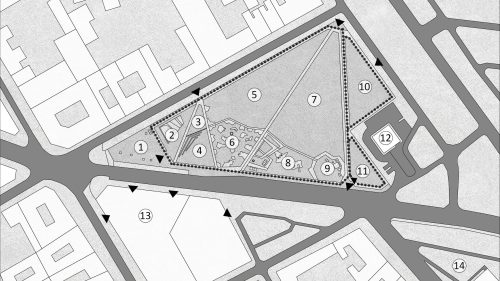
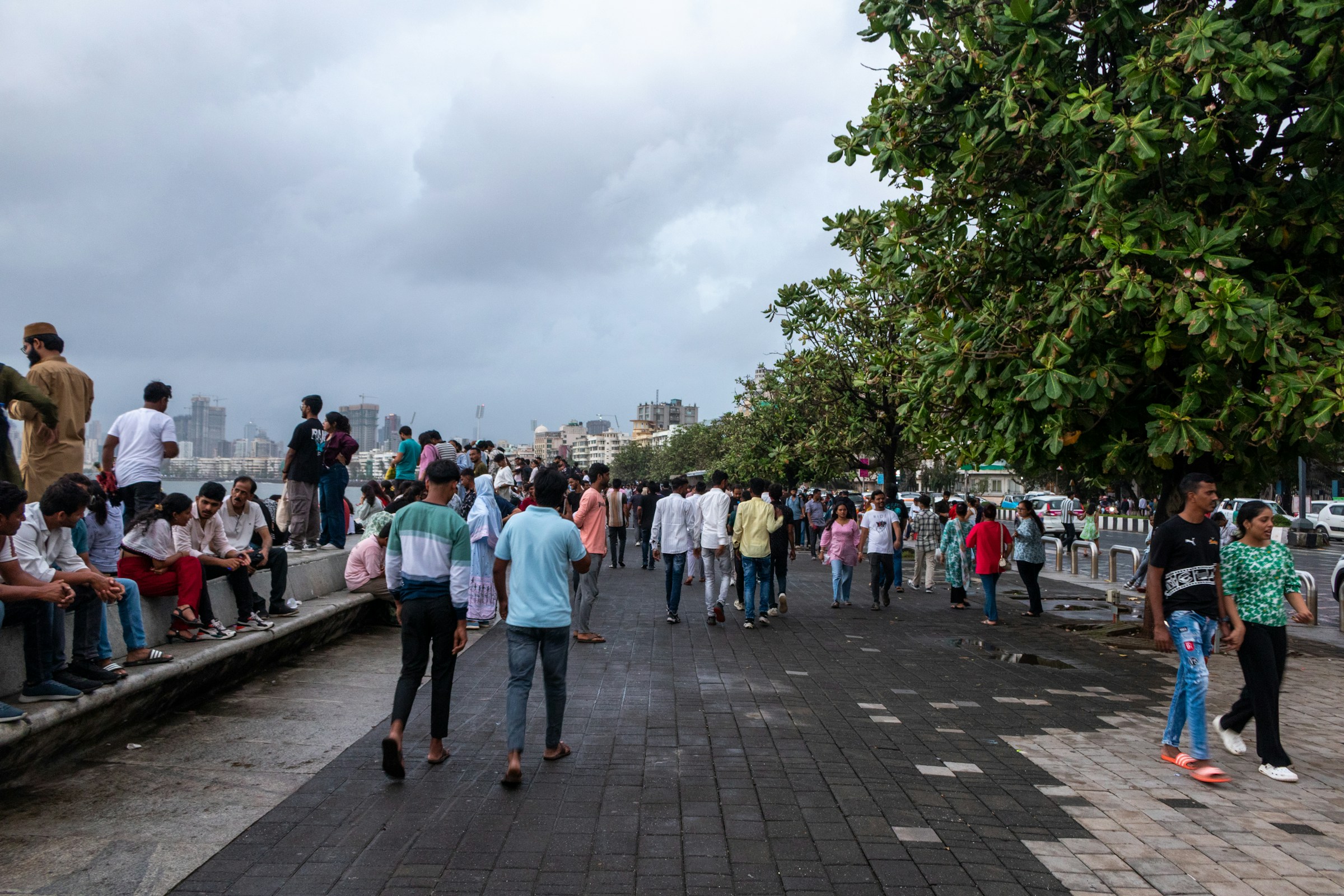
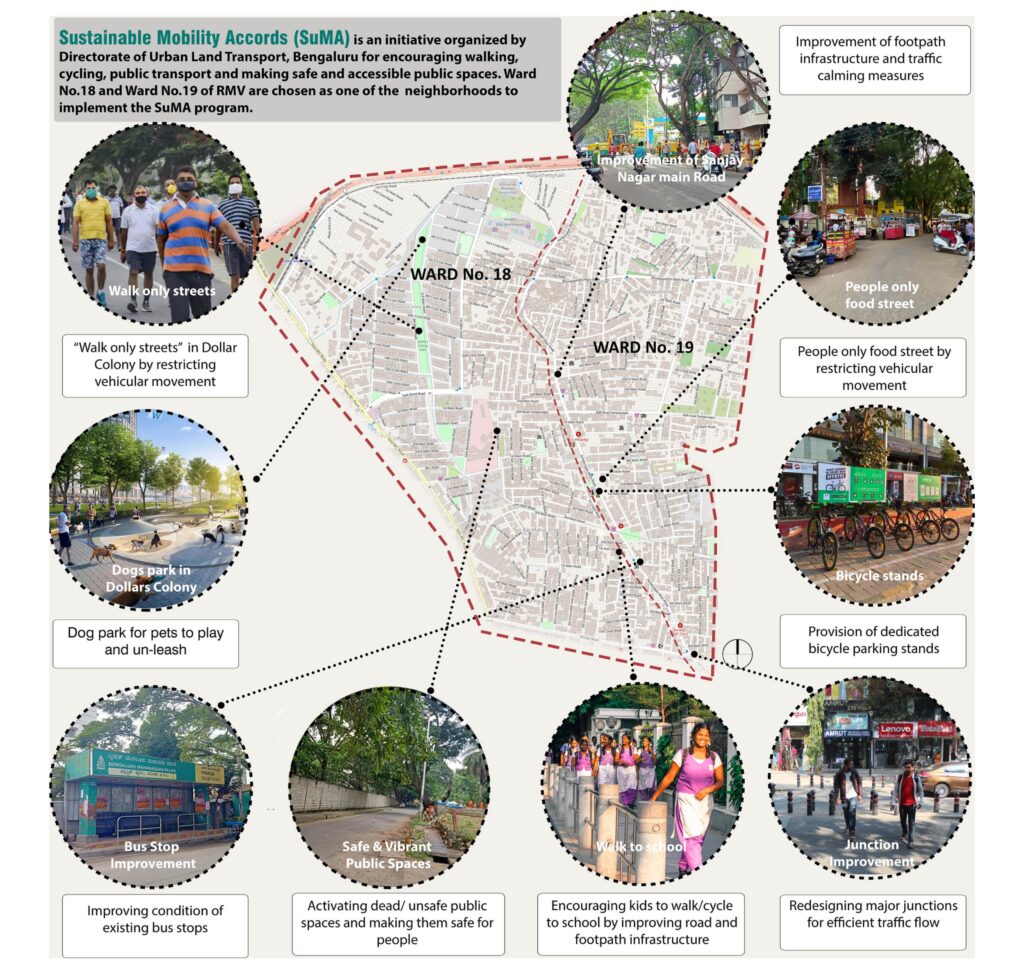
Professional engagement as an architect and Habitat Designer with the Monsoon Studio at the Directorate of Urban Land Transport, Government of Karnataka, under the Sustainable Mobility Accords (SuMA) initiative, provided a grounded understanding of how public projects can evolve through collaborative civic processes. Working on a neighbourhood development proposal for RMV Layout in Bengaluru — a 3.4 sq. km predominantly residential area with active commercial edges and scattered public spaces — revealed how urban commons shall not merely be designed, but collectively negotiated and shaped. Rather than approaching the neighbourhood as a site for isolated interventions, the process framed it as a living socio-spatial ecosystem. A detailed spatial and behavioural analysis led to the identification of multiple public realm proposals (as shown in figure 03): a “Walk to School” initiative to enhance child-friendly mobility; the redesign of Sanjaynagar Main Road as a safer, more inclusive corridor; park enhancements; upgraded bus stops integrated with cycling infrastructure; a neighbourhood food street; and pedestrian-priority zones around local parks. Each intervention was conceived not only as physical infrastructure, but as catalysts for belonging, safety, and everyday interaction.
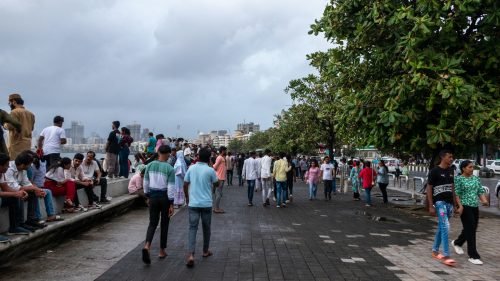
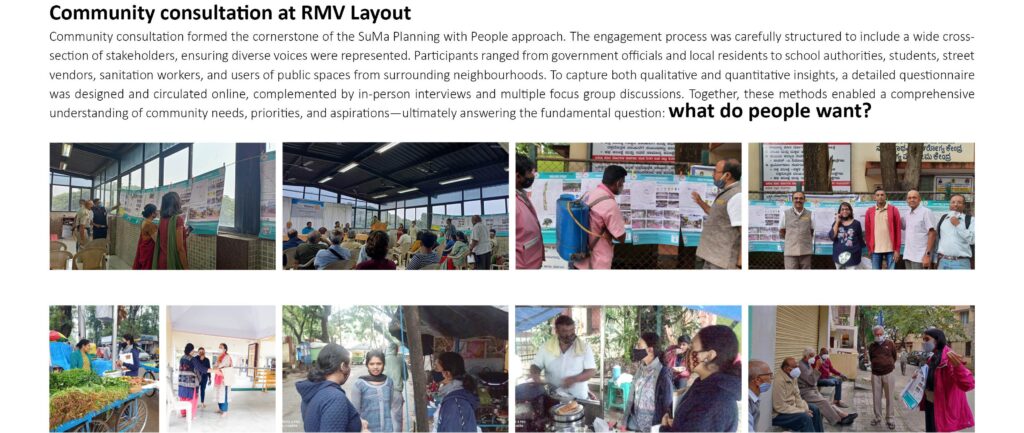
Central to this process was sustained stakeholder engagement. The urban design team worked closely with the Resident Welfare Association, municipal authorities, service providers, local vendors, and everyday users (as shown in figure 04). Focus group discussions, community consultations, and participatory workshops created spaces for dialogue and collective problem-solving. Multiple survey methods — from digital questionnaires circulated via community networks to on-site paper surveys facilitated by volunteers — ensured broader inclusion across age groups and digital access levels. Importantly, participation did not conclude at consultation. Once proposals were synthesized, visual posters communicating the design intent were displayed across the neighbourhood, inviting residents to review, reflect, and vote on priority projects. This transparent feedback loop transformed residents from consultees into co-decision-makers.
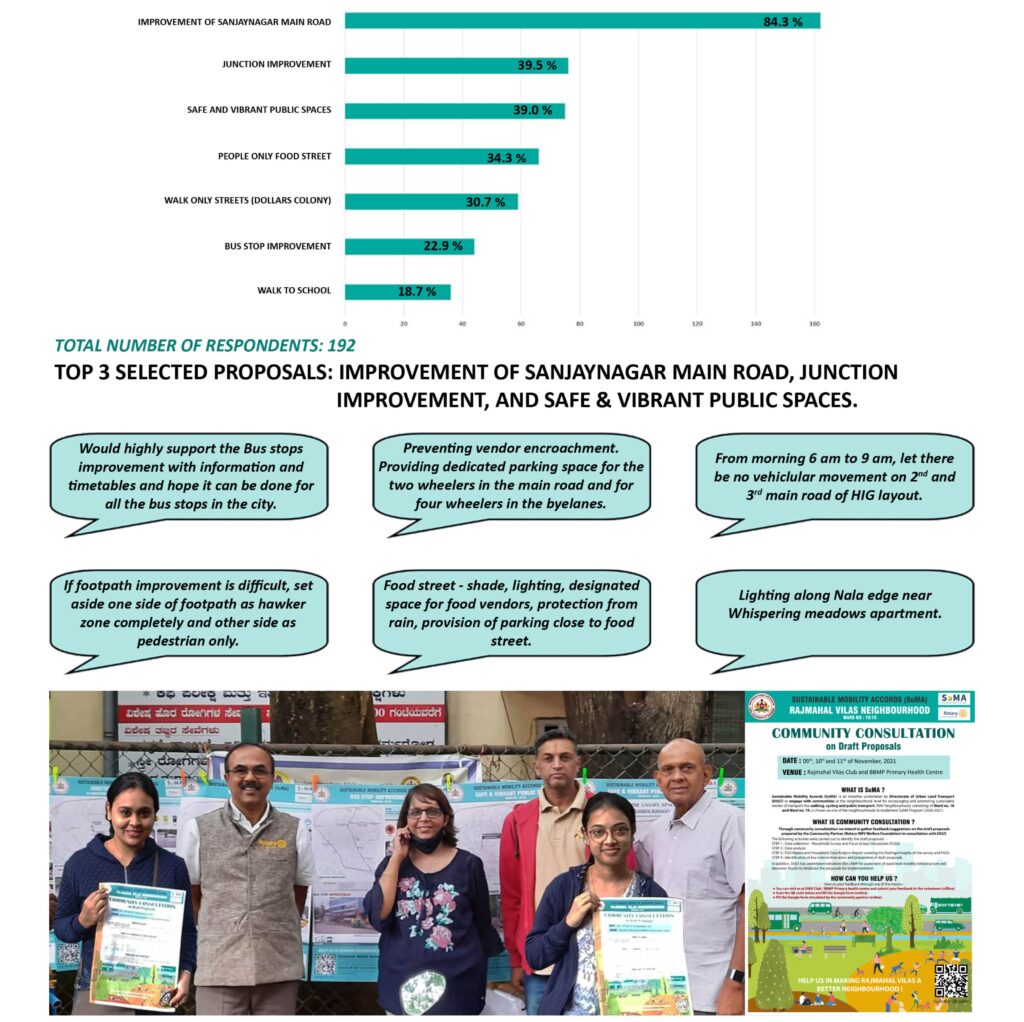
The redevelopment of Sanjaynagar Main Road emerged as the most supported intervention. Guided by this collective mandate, the government advanced the project, demonstrating how institutional action can align with citizen agency. In this instance, urban transformation was not imposed but co-created — reinforcing the idea that sustainable cities are built through shared authorship, stewardship, and a deepened sense of civic belonging.
The experience of co-developing RMV Layout demonstrates that sustainable urban futures are not produced solely through policy mandates or design expertise, but through shared responsibility and collective imagination. When residents are invited into the processes of diagnosing problems, envisioning possibilities, and prioritizing interventions, urban commons transform from neglected assets into lived and cared-for spaces. Streets become safer because communities demand it; parks thrive because neighbours feel ownership; public transport infrastructure improves because users participate in shaping it. Co-creation, therefore, is not an add-on to planning—it is a democratic infrastructure that strengthens both space and society. For other neighbourhoods across Bengaluru, this approach offers a replicable pathway. Resident Welfare Associations, ward committees, and local civic groups can initiate structured dialogues with municipal bodies, supported by urban designers and planners who act as facilitators rather than sole decision-makers. Simple yet inclusive tools—community surveys, street audits, children’s mapping exercises, public exhibitions of design proposals, and participatory voting—can anchor decision-making in everyday lived experience. Digital platforms may expand reach, while on-ground engagements ensure inclusivity beyond digitally connected groups.10,24 Crucially, institutional support must complement community initiative. Municipal authorities can formalize participatory budgeting processes, create stewardship agreements for parks and lakes, and allocate micro-grants for neighbourhood improvements. When governance systems recognize citizens as partners rather than passive beneficiaries, urban commons become shared projects of care.
A mechanism enabling Co-Creation
Promoting the co-creation of urban commons in cities requires institutional, legal, and cultural mechanisms that embed collaboration into everyday urban governance (As shown in figure 05). Municipalities can begin by formalizing participatory frameworks such as neighbourhood councils and ward committees that enable continuous citizen engagement rather than one-time consultation. Legal recognition of urban commons through shared governance agreements can clarify roles between communities and local governments, protecting common spaces from neglect or privatization. Participatory budgeting further strengthens citizen agency by linking community priorities to resource allocation.27 Small-scale micro-grants and tactical urbanism initiatives can empower residents to experiment with low-cost, temporary interventions that often evolve into permanent improvements. Digital platforms and participatory mapping tools can widen access and transparency, ensuring broader inclusion across demographic groups. Equally important is investing in capacity-building programs that equip citizens with skills in design literacy, sustainability practices, and collaborative decision-making.27Together, these mechanisms foster shared stewardship, strengthen trust between institutions and communities, and cultivate belonging—transforming urban commons into resilient, collectively sustained spaces that anchor sustainable urban futures.
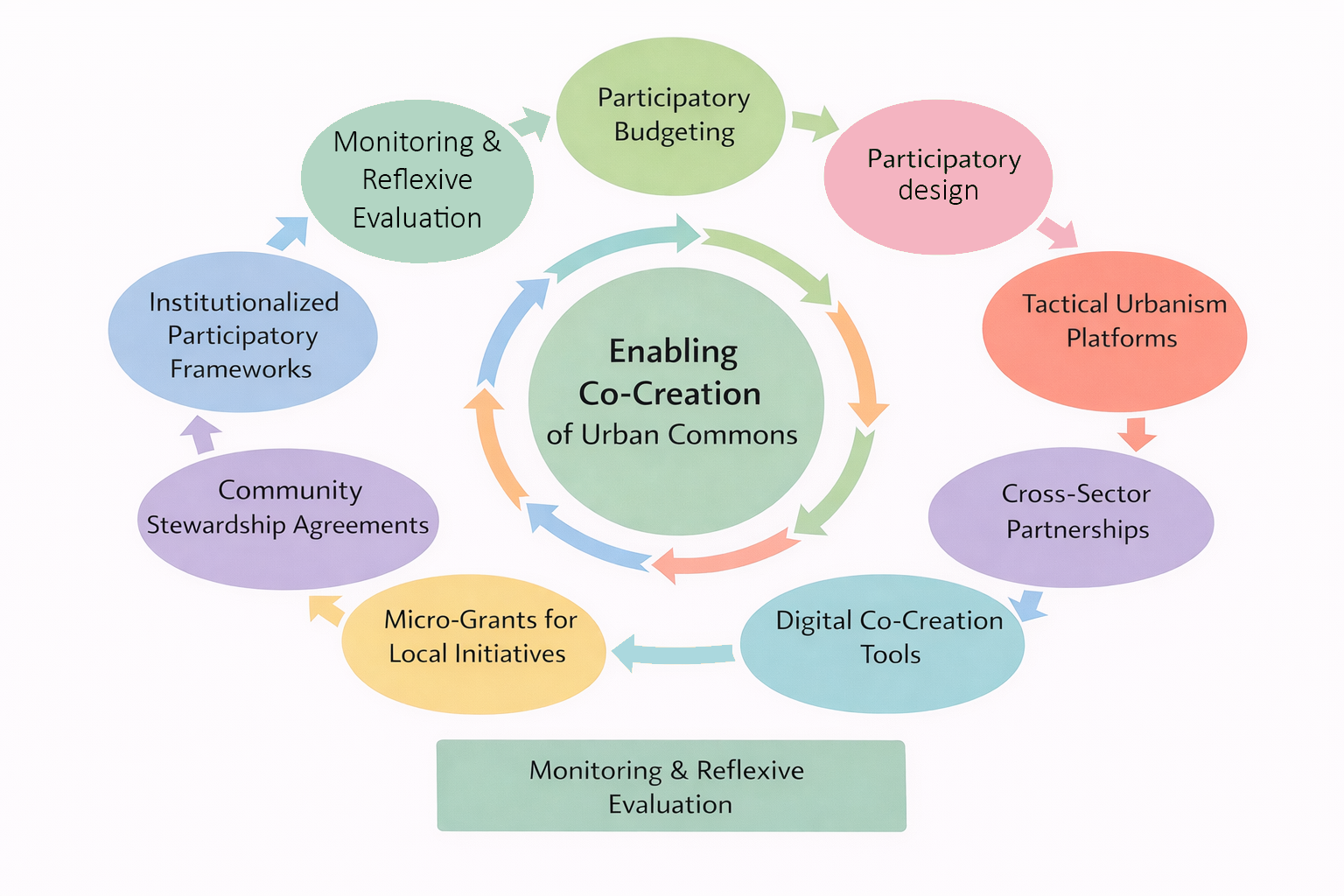
To sustain these efforts, cities must adopt reflexive and adaptive governance approaches that allow co-created initiatives to evolve in response to changing social, environmental, and political conditions. Co-creation is not a one-time intervention but an ongoing process that requires iterative learning, periodic review, and institutional flexibility. Continuous evaluation mechanisms—such as community audits, participatory monitoring, and transparent reporting—can help assess whether shared spaces remain inclusive, accessible, and well-maintained. Open feedback channels, both digital and face-to-face, enable communities to voice concerns, propose adjustments, and collectively negotiate emerging challenges.28,29 Equally critical is equitable resource distribution to ensure that co-creation does not disproportionately benefit already empowered groups while marginalizing others. Targeted support for underrepresented communities can help balance participation and strengthen social justice outcomes along with AI –enabled participation.29 When institutions remain responsive and communities stay actively engaged, co-creation becomes embedded within urban culture itself—deepening trust, reinforcing stewardship, and strengthening not only the physical fabric of cities but also the democratic foundations upon which long-term sustainability depends.
Way forward
Looking ahead, the co-creation of urban commons offers an optimistic and actionable pathway toward more sustainable, inclusive, and connected cities. Beyond technological innovation and regulatory reform, the future of urban sustainability lies in strengthening shared stewardship between citizens, institutions, and civil society. By embedding participatory practices into the everyday governance of parks, streets, lakes, and public spaces, cities can transform shared environments into living platforms of collaboration and care. When diverse voices are meaningfully included and supported, co-creation nurtures trust, accountability, and collective ownership. Governments, designers, and communities can work as partners—combining institutional capacity with local knowledge and lived experience—to ensure that urban commons remain accessible, resilient, and responsive. As citizens recognize their imprint in the spaces they help shape, belonging deepens and sustainable behaviours become part of daily life. In this spirit, co-creating urban commons is not merely a planning approach but a hopeful civic practice—one that positions cities as shared projects sustained through agency, stewardship, and collective imagination for a successful future.
References
- Campbell S. Green cities, growing cities, just cities? J Am Plann Assoc. 1996;62(3):296-312.
- Healey P. Collaborative Planning: Shaping Places in Fragmented Societies. 2nd ed. Palgrave Macmillan; 2006.
- Gehl J. Cities for People. Island Press; 2010.
- Ostrom E. Governing the Commons: The Evolution of Institutions for Collective Action. Cambridge University Press; 1990.
- Harvey D. The right to the city. New Left Rev. 2008;53:23-40.
- Säumel I, et al. People drive or stop transitions. Nat Cities. 2026.
- Subedi A. Relational co-research in participation. Nordic J Interdisciplinary Place Studies. 2025.
- Lefebvre H. The Right to the City. Blackwell; 1996.
- Miraftab F. Invited and invented spaces of participation. Int Dev Plan Rev. 2004;26(4):405-427.
- Bulkeley H, Castán Broto V. Government by experiment? Glob Environ Change. 2013;23(1):92-102.
- Helbing D. Co-creating the future: participatory cities and digital governance. Philos Trans A Math Phys Eng Sci. 2024;382(2285):20240113.
- Hughes M, et al. Voice to Vision. 2025.
- Mushkani R, et al. Generative AI for consultations. 2025.
- Christiaanse S, et al. Conditions for co-creation in planning tools. J Rural Stud. 2025.
- Loughran K. Parks for profit: the High Line, growth machines, and the uneven development of urban public spaces. City Community. 2014;13(1):49-68.
- Participatory Urban Planning and Design. Case studies in co-creation and urban sustainability, 2020.
- Scheurer J, Newman P. Vauban: A European model bridging the green and brown agendas. J Urban Regener Renew. 2009;3(2):123-135.
- Rethinking The Future. Urban regeneration and public space case studies, 2021.
- Karres en Brands. Superkilen: Public space and cultural representation. Archit Des. 2013;83(1):96-101.
- Durable Vintage. Sustainable neighbourhoods and co-creation practices, 2020.
- Petcou C, Petrescu D. R-Urban: Strategies for local resilience. Field. 2015;7(1):1-15.
- Shareable. R-Urban: Networked community resilience and sustainability, 2015.
- Patel S, Baptist C. Documenting by the undocumented. Environ Urban. 2012;24(1):243-260.
- ArchDaily. Participatory urbanism and resource-sensitive design case study, 2019.
- Flores CC, et al. Generative governance and co-creation. Urban Planning. 2025.
- Institute for Human Rights and Business. Healthy corridors and community engagement, 2021.
- Fung A, Wright EO. Deepening democracy: innovations in empowered participatory governance. Polit Soc. 2001;29(1):5-41.
- Nidam Y, et al. Practicing data inclusion. Environ Plan B. 2025.
- Raymond CM, et al. AI in participatory urban planning. npj Urban Sustain. 2025.