
What is a Smart City?
The concept of a Smart City has become popular as an answer to emerging needs and challenges of urban areas. Fueled by the potential of information and communication technologies (ICT), cities around the world are adopting a variety of strategies to make their cities smarter to improve economic competitiveness, sustainability, social and capital attractiveness and quality of life.
There are already a lot of examples of implementing smart city concepts into cities’ strategies. For instance, Barcelona introduced smart parking – sensors pedal when space is free, and data becomes available on a mobile app to its users. Oslo implemented smart LED lights that are 50% more energy-efficient; sensors turn lights off when people and cars are not around, as well as monitoring traffic levels and pollution, feeding data back to councils. Singapore went a step further by developing the Smart Nation Initiative, which is used to leverage technology towards improving lives by using connectivity, infrastructure, and common technical architecture.1
It is important to point out the difference between the smart city and a conscious city. The smart city focuses on improving the efficiency of services; the conscious city is “aware of the needs and activities of its inhabitants and responds to them through data analysis, artificial intelligence, and the application of cognitive sciences in design”2. The conscious city helps to improve the experience of the citizens and have better mental and physiological effects. Researchers found that 1Singapore Government Technology Agency. Smart Nation Sensor Platform.2 Itai Palti, Moshe Bar (28 August 2015). “A manifesto for conscious cities: should streets be sensitive to our mental needs?”. The Guardian. conscious cities could alleviate stress, anxiety, and boredom by “being sensitive to the pervading moods and personalities of people in different parts of the city”3
Role of Culture in a Smart City and its Benefits
The goal of the smart city is to make infrastructure more efficient, but often that will come at the cost of other considerations like a culture that used to be the legacy for some cities, while all of the sides can benefit from ICT if constructed to do so.4
Amitabh Kant, CEO of The National Institution for Transforming India, states: “Technology for smart cities without art and culture component will create lop-sided development only. Therefore, you need to take efforts to design, attract, retain and nurture the creative workforce of our cities. Technology and art and culture must embrace each other. We cannot have smart cities without art and culture.”5
Culture can mean not only cultural heritage but urban creative industries or “a focus on the needs of the citizen by promoting livability within cities”.6 Cultural heritage can significantly contribute to the economic growth of a city as it attracts visitors to cultural events, museums, monuments, etc. Thus, cultural heritage has the potential to develop cities and must be revamped by creating solutions that lead to “smart cultural heritage”.7
Heritage protection is one of many ways to strengthen national identity, preserve the culture and develop its importance in smart cities. For centuries, cultural values have been preserved, so in modern society, it is also necessary to develop and maintain the historical appearance of the city. Many cities have already answered the question of how to maintain a balance between the protection of the historical center and the development of the urban environment. We can see great examples of it in Asian, European, African, Latin American cities. One of the great examples is the Guggenheim Museum in Bilbao. The museum exceeded expected ROI and is successfully contributing to the rejuvenation of a previously decaying urban area.8 Northern European cities, such as Oslo, Copenhagen, and Reykjavik, are among the most effective exploiters of new opportunities. Different factors might cause it, such as essentially strong position in economic terms, or inherent drama of their settings, but they are great examples of using opportunities of both culture and cities.9
Cultural Preservation in Georgia
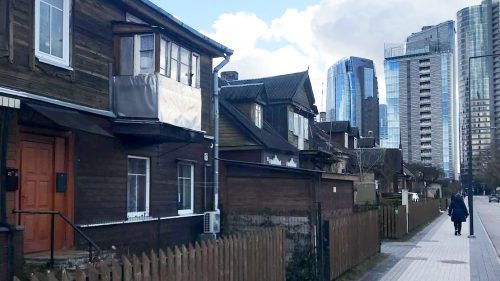
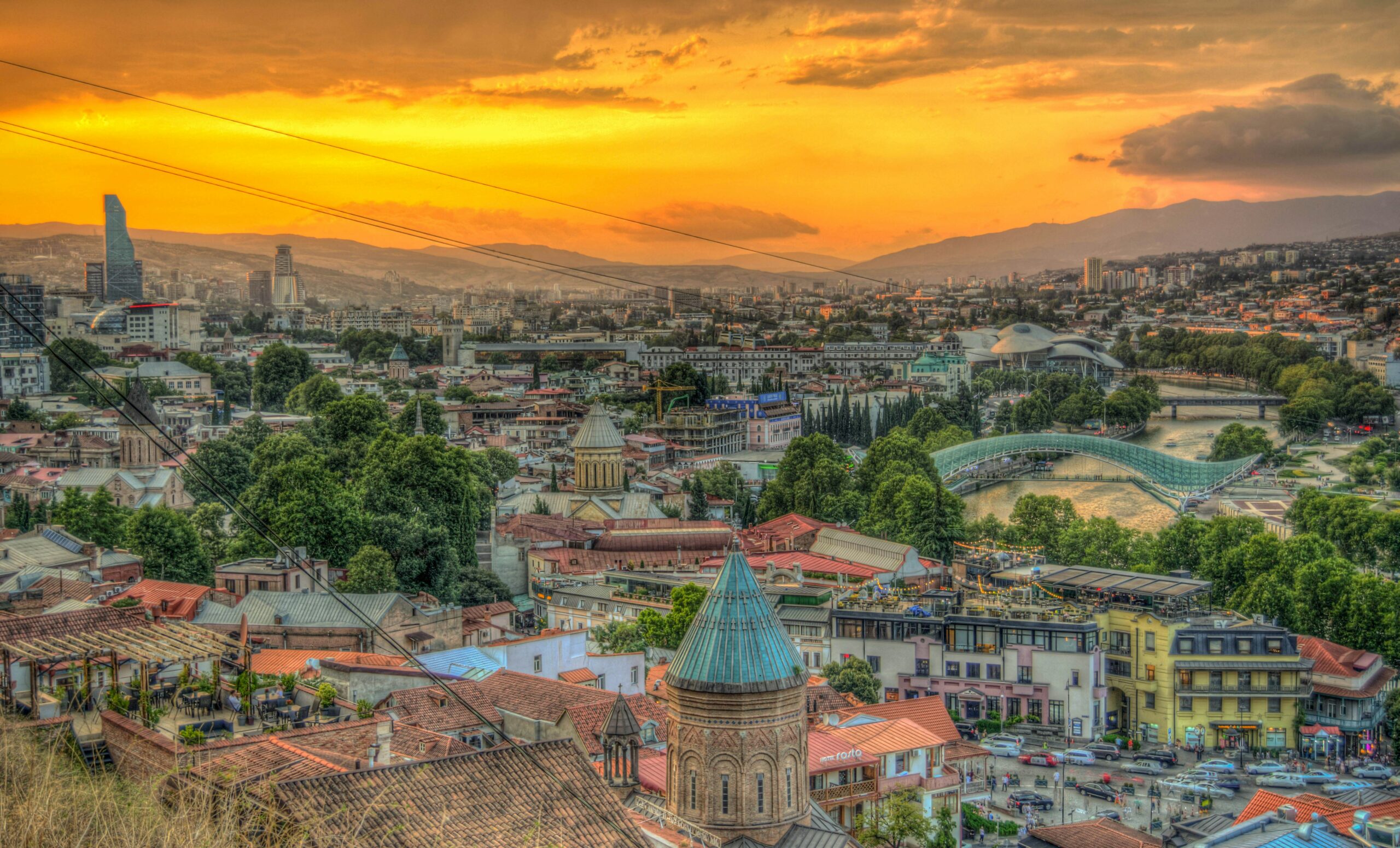
I want to consider my hometown, Tbilisi, the capital of Georgia, as a future smart city. Tbilisi has central importance for Georgia’s economy, civil society, development, culture, and political life. Today, Tbilisi is a “mix of old and new, urban and almost rural, and highly functional and deeply dysfunctional”.10
Georgian government has already started implementing initiatives towards incorporating culture in the city. Thus, for example, the Department of Cultural Heritage has developed “The Culture Strategy 2025”, a policy for the preservation of cultural heritage in Georgia. The strategy focuses on the creative industries, including the promotion of creative startups that will be beneficial for Georgia’s socio-economic development, in addition to the traditional directions of culture. The main principles of the Strategy are openness, transparency, and inclusiveness, and its long-term strategy to create a heritage management system. The Vision of the Georgian Culture Strategy 2025 is to “develop Georgia as a creative country and regional hub where innovation and creativity, along with safeguarding and revitalizing national heritage and cultural diversity, are the fundamental pillars of social wellbeing and sustainable development”.11
Moreover, in 2017 Tbilisi released the Land Use Master Plan 2030, which will increase the efficiency of infrastructure, create a balanced road network, reduce traffic congestion and establish a network of green spaces.12 The Master Plan takes into consideration strengths of Tbilisi, such as its uniqueness, intellectual, cultural and artistic traditions, extraordinary natural and urban peculiarities, economic and human resources, also its advantageous location in the South Caucasus and positive reputation from the point of business and tourism development.13
Tbilisi’s competitiveness, according to the Master Plan14, is dependent on its attractiveness, which is determined by two groups of factors:
- Structural factors: effective infrastructure, development of the main types of urban services, high quality of the residential environment and effective urban policy;
- Functional factors (i.e. functions that could be performed by the city): features that allow the city to become a destination for international businesses, innovative business centers, important conjunction of communication network and an international center of culture.
Spatial territorial planning policy should be serving as the empowerment of these factors.
The local government of Tbilisi is also taking steps to develop the city. For instance, the residents’ condominium associations are repairing building facilities and equipping them with advanced heating systems. According to research, “Tbilisi’s old landfill was closed and replaced, the street lighting system has been upgraded with energy-efficient bulbs and the city’s water system is shifting from pumping into gravity. The city has sought to improve public bus and metro service provision, improving bus reliability with new technology and improving existing metro infrastructure. It now plans to expand cable car lines and is pursuing light-rail transit.”15
Obstacles
After obtaining independence, Tbilisi experienced a very turbulent period of instability. The turn-of-the-century stabilization was followed by a new wave of intense development activity since 2003. With the abrupt changes in Georgia, Tbilisi, like many other post-Soviet cities, has faced new challenges. The lack of social housing, green and public spaces in general, homelessness, poor construction quality, and chaotic development practices have led to problematic densities and environmental problems. Meanwhile, the famous historical center of Tbilisi is in need of urgent reconstruction.16
The greatest number of problems discussed by experts is related to the transportation situation in Tbilisi.17 Also, fragmentary urban environmental management is one of the problems of the city, due to an uneven distribution of the population and congestion in its center.18
One of the most important factors in the cost of urban land, along with its prestige, is its availability. In Tbilisi, the excessive transport and social burden take place in the historical center, which predisposes to an imbalance between the center and the periphery. The city of Tbilisi is in a stage of hyper urbanization, resulting in several peripheral parts of the city becoming isolated from the center, due to the high cost of transportation.19
The consequence of the established tendency of hyper urbanization is a disastrous situation of the natural environment in the city center, which is distinguished by destroyed open green spaces. For decades, the urban monocentric model has been a tool for destroying the cultural and natural heritage of the historic city center. Areas inaccessible by public transportation, such as the subway, are losing their appeal, and many residents of the central districts do not utilize them as integral parts of Tbilisi.
But it is also important to mention the strong side of Tbilisi. The strongest part of Tbilisi for both international and local positioning is the traditional hospitality, rich history, unique nature and geographical location, which significantly determines the characteristic image of the city. Due to the geolocation of Tbilisi, it is equally attractive for both the East and the West. International festivals and various cultural events in Tbilisi contribute to the positioning of the city both at the international and regional level. The function of the educational center of the capital helps to attract local and foreign students. The development of modern shopping centers creates additional interest in Tbilisi.
For centuries, cultural values have been preserved, so in modern society, it is also necessary to develop and preserve the historical appearance of the city. Smart city technologies and cultural aspects of it may help to solve at least a part of those problems, if not all of them.
Heritage protection is one of many ways to strengthen national identity, preserve the culture and develop its value in smart cities.20 It is important to educate and inform people about cultural heritage and its impact.
Many European cities have already answered the question of how to maintain a balance between the protection of the historic center and the development of the urban environment. One of the tools for a historical megacity might be the development of a polycentric model of the city. The protection of the cultural and natural heritage of the city and the historical center of Tbilisi should be based on the methodological and legal principles of polycentrism set out in the recognized conventions of UNESCO and the Council of Europe, “Manifesto for a New Urbanity: European Urban Charter II” and “Community-Led Urban Strategies in Historic Towns”.
From an urban perspective, culture may include urban cultural heritage or urban creative industries or may also simply mean focusing on the needs of citizens by promoting better urban living conditions. All three elements can benefit from ICT if they are designed to do so. Cultural heritage is an industry that can make a significant contribution to the economic growth of the city, as millions of visitors are attracted by cultural events, art galleries, monuments and even historical centers, and museums. The potential that constitutes cultural heritage must be renewed through comprehensive solutions that lead to intellectual cultural heritage.
Another way can be restoration. It might be a lot slower than demolition, but not necessarily more expensive.21 It helps to preserve historic buildings and give them a new life.
Conclusion
The future of Tbilisi and its citizens will largely depend on how the driving forces – both internal and external (for Tbilisi and Georgia) – operate. As research shows, “while municipal authorities may not have any control over external factors, they can still shape or at least influence factors of local origin.”22 The future of Tbilisi is ultimately in the hands of the people of Tbilisi.
Recognizing and preserving the culture and cultural heritage is an important aspect of re-inventing cities for the future. The implementation of ICT in Smart City development, on the surface, seems to preclude culture from the planning equation. However, there are examples in which culture and ICT can work together to build a Smart Conscious City that is not only efficient but beautiful. Tbilisi has the cultural heritage and determination to test the boundaries of culture and ICT and build a Smart Cultural City.
References
- Singapore Government Technology Agency. Smart Nation Sensor Platform. https://www.tech.gov.sg/productsand-services/smart-nation-sensor-platform/
- Itai Palti, Moshe Bar (28 August 2015). “A manifesto for conscious cities: should streets be sensitive to our mental needs?”. The Guardian.
- Markus Jokela, Wiebke Bleidorn, Michael E. Lamb, Samuel D. Gosling, and Peter J. Rentfrow (15 August 2014). “Geographically varying associations between personality and life satisfaction in the London metropolitan area”. Proceedings of the National Academy of Sciences. 112 (3): 725–730.
- Allam, Zaheer & Newman, Peter. (2018). Redefining the Smart City: Culture, Metabolism and Governance. Smart Cities. 1. 4. 10.3390/smartcities1010002.
- Jenée Iyer. (June 2017). The Heart of Smart cities: A case for the relevance of art in data-driven cities. Carnegie Melon University Arts Management & Technology Laboratory.
- Allam & Newman. Redefining the Smart City.
- Ibid.
- Beatriz Plaza. (June 2006). “The Return on Investment of the Guggenheim Museum Bilbao,” International Journal of Urban and Regional Research, Wiley Blackwell, vol. 30(2), pages 452-467.
- Melvin, Jeremy. Smart Cities built on culture. https://artworksapp.com/articles/smart-cities-built-on-culture
- Lincoln Mitchell. (2015). Making Tbilisi’s Future – A look at Georgian capital’s current problems. https://www.georgianjournal.ge/society/31308-mak
- The Ministry of Culture and Monument Protection of Georgia. (2018). Georgian Cultural Strategy.
- Copenhagen Centre. Energy Efficiency Brief. Tbilisi-Georgia. http://kms.energyefficiencycentre.org/publication-report/energy-efficiency-brief-tbilisi-georgia
- City Institute Georgia. (2018).
- Tabatadze, Kate. Economic Benefits of Tbilisi’s General Land Use Plan. (2016). https://propertygeorgia.ge/en/news/economic-benefits-tbilisis-general-land-use-plan
- World Bank Group. (2016). What Makes a Sustainable City? A Sampling of Global Case Studies Highlighting Innovative Approaches to Sustainability in Urban Areas. https://www.scribd.com/document/325717555/WorldBankWhatMakesaSustainableCity-pdf
- Assche Van K., Salukvadze J. (2012). Tbilisi: Urban Transformation and Role Transformation in the Post-Soviet Metropolis. Remaking Metropolis: Global Challenges of the Urban Landscape. Pp. 86 – 102.
- Information and Analytics Department of the Ministry of Internal Affairs of Georgia. (2016). Road traffic accidents in Georgia in 2008-2015. P. 56
- Systra. (2014). The Household Survey. P. 59.
- National Statistics Service of Georgia. (2017). Demographic situation in Georgia. P.24.
- Jenée Iyer. (June 2017). The Heart of Smart cities: A case for the relevance of art in data-driven cities. Carnegie Melon University Arts Management & Technology Laboratory. P.11
- Bergfors, Sara. Tbilisi destroys its past. (2014). The Old Town is transformed. Baltic Worlds Vol VI:3-4, pp. 2931 http://balticworlds.com/tbilisi-destroys-its-past/
- United Nations Environment Programme. (December 2011). GEO-Cities Tbilisi: An integrated Environmental assessment of state and Trends for Georgia’s Capital City. http://www.envsec.org/publications/geocities_tbilisi.pdf
Bibliography:
- Allam, Zaheer & Newman, Peter. (2018). Redefining the Smart City: Culture, Metabolism and Governance. Smart Cities.
- Assche Van K., Salukvadze J. (2012). Tbilisi: Urban Transformation and Role Transformation in the Post-Soviet Metropolis. Remaking Metropolis: Global Challenges of the Urban Landscape. Pp. 86 – 102.
- Beatriz Plaza. (June 2006). “The Return on Investment of the Guggenheim Museum Bilbao,” International Journal of Urban and Regional Research, Wiley Blackwell, vol. 30(2), Pp. 452-467.
- Bergfors, Sara. Tbilisi destroys its past. (2014). The Old Town is transformed. Baltic Worlds Vol VI:3-4, pp. 29-31 http://balticworlds.com/tbilisi-destroys-its-past/
- City Institute Georgia. (2018).
- Copenhagen Centre. Energy Efficiency Brief. Tbilisi-Georgia. http://kms.energyefficiencycentre.org/publication-report/energyefficiency-brief-tbilisi-georgia
- Information and Analytics Department of the Ministry of Internal Affairs of Georgia. (2016). Road traffic accidents in Georgia in 2008-2015. P. 56
- Itai Palti, Moshe Bar (2015). “A manifesto for conscious cities: should streets be sensitive to our mental needs?”. The Guardian.
- Jenée Iyer. (2017). The Heart of Smart cities: A case for the relevance of art in data-driven cities. Carnegie Melon University Arts Management & Technology Laboratory.
- Lincoln Mitchell. (2015). Making Tbilisi’s Future – A look at Georgian capital’s current https://www.georgianjournal.ge/society/31308-mak problems.
- Markus Jokela, Wiebke Bleidorn, Michael E. Lamb, Samuel D. Gosling, and Peter J. Rentfrow (2014). “Geographically varying associations between personality and life satisfaction in the London metropolitan area”. Proceedings of the National Academy of Sciences. 112 (3): 725–730.
- Melvin, Jeremy. Smart Cities built on culture. https://artworksapp.com/articles/smart-cities-built-on-culture
- National Statistics Service of Georgia. (2017). Demographic situation in Georgia. P.24.
- Singapore Government Technology Agency. Smart Nation Sensor Platform. https://www.tech.gov.sg/products-and-services/smart-nationsensor-platform/
- Systra. (2014). The Household Survey. P. 59.
- Tabatadze, Kate. Economic Benefits of Tbilisi’s General Land Use Plan. (2016). https://propertygeorgia.ge/en/news/economic-benefits-tbilisisgeneral-land-use-plan
- The Ministry of Culture and Monument Protection of Georgia. (2018). Georgian Cultural Strategy.
- United Nations Environment Programme. (2011). GEO-Cities Tbilisi: An integrated Environmental assessment of state and Trends for Georgia’s Capital City. http://www.envsec.org/publications/geocities_tbilisi.pdf
- World Bank Group. (2016). What Makes a Sustainable City? A Sampling of Global Case Studies Highlighting Innovative Approaches to Sustainability in Urban Areas.