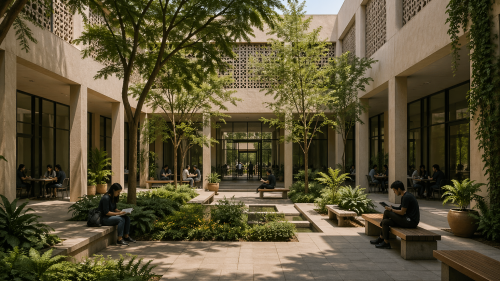
A Four-Part Series on Philosophical Aesthetics
When trying to understand complex or elusive ideas, an interdisciplinary approach offers far more insight than any single discipline alone. As the fields of neuroscience, cognitive science, and design increasingly take on questions of beauty, it’s important not to reduce aesthetics to just sensory data or psychology. The most robust understanding draws from philosophy, art, science, and of course, architecture.
For thousands of years, philosophers have shaped our ideas of beauty. Their insights remain surprisingly relevant not only to art and ethics, but also to how we design and experience the spaces we live in. This series explores four key concepts in philosophical aesthetics: beauty, the sublime, taste, and aesthetic experience. We begin with the most enduring of them all: beauty.
Beauty in Ancient Philosophy
Beauty has long been considered the “queen” of aesthetic values. Even contemporary scientists like Martin Skov and Marcos Nadal recognize its philosophical foundations: “Beauty is first and foremost a philosophical idea.”
The philosophical story often begins with Plato. In Symposium, Socrates recounts a conversation with Diotima, who describes beauty as something we ascend toward—beginning with the physical beauty of a single body, then many bodies, then the beauty of minds and ideas, and finally, Beauty itself. It’s a kind of aesthetic ladder, rising from the physical to the metaphysical.
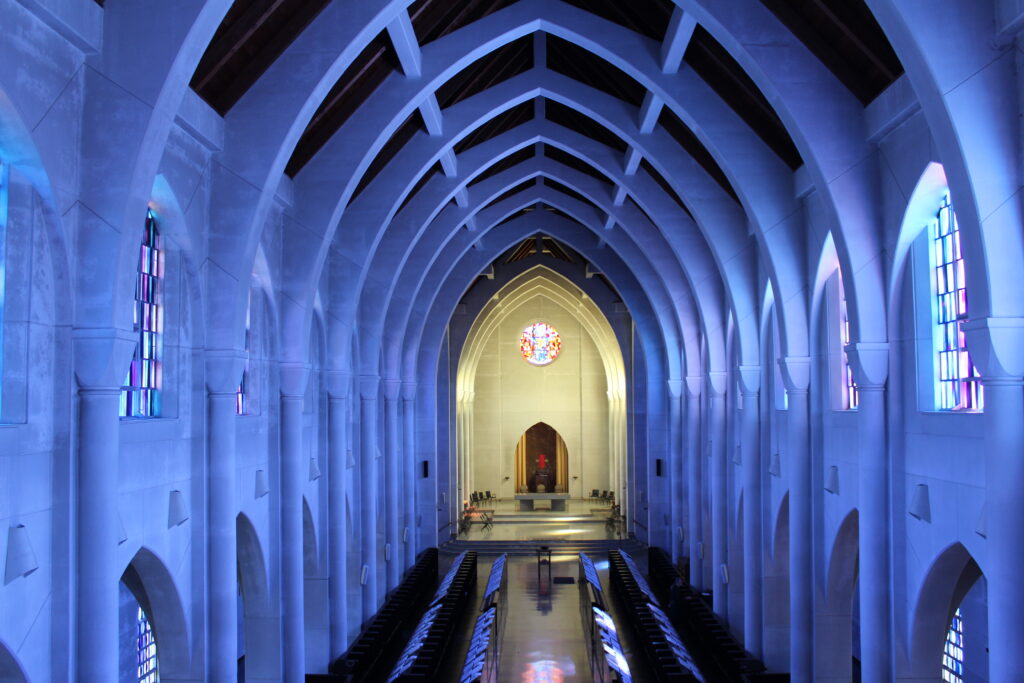
This vision of beauty as an intellectual ascent resonates with certain architectural traditions. Think of spaces designed to elevate human thought, such as monasteries, libraries, or sacred sites. These places guide us toward something greater, just as Diotima’s speech guides the soul toward immaterial beauty.
Plato’s student, Aristotle, approached beauty more practically. Instead of locating it in a separate realm, he grounded it in physical reality. For him, beauty was found in order, proportion, and definiteness, concepts that remain central in architecture today.
He illustrates this with a compelling example. A random pile of bricks looks purposeless. But if those same bricks form a low square or wall, we intuit some design, even if we don’t know its exact purpose. Form suggests intention. For Aristotle, beauty is tied to functionality and coherence.
Both Plato and Aristotle saw beauty as something we discover, not something we invent. Whether in forms or in nature, beauty had structure and logic. This belief carried into the medieval period, when many theologians claimed that beauty was rooted in the mind of God, a view still held by many religious traditions and echoed in sacred architecture across cultures.
Beauty in Medieval Thought
Medieval philosophers expanded this external grounding of beauty. One of the most influential was Thomas Aquinas, who offered a clear and concise definition: “Beauty is that which pleases when seen.”
At first, this may sound like pure subjectivity. But “seen” for Aquinas implied more than a quick glance. It was a contemplative act, an encounter between the mind and the object. Beauty, for Aquinas, is both experienced and understood.
He identified three core conditions of beauty:
- Proportion: the relationship of parts to the whole.
- Integrity: whether the object has the appropriate number and kind of parts to fulfill its function.
- Radiance: brightness and clarity, but also metaphorical luminosity, like the kind we find in poetry or spiritual architecture.
These concepts map naturally onto architectural practice. Proportion influences everything from façades to floor plans. Integrity reminds us that beauty depends on how well a structure suits its purpose. And radiance, think of light filtering through stained glass or a sunlit atrium, shows how light shapes aesthetic experience.
Like Plato and Aristotle, Aquinas believed beauty is discovered, not determined. The structure of the object itself—its form, unity, and clarity—matters as much as the viewer’s reaction.
The Modern Turn
The modern period brought a dramatic philosophical shift. René Descartes, though not focused on aesthetics, changed how we think about reality. His Meditations on First Philosophy (1641) used radical doubt to build a secure foundation for knowledge. He questioned everything: his senses, the world, even mathematics, until he arrived at one certainty: Cogito, ergo sum (“I think, therefore I am”).
This inward turn moved the grounding of truth, and eventually beauty, into the mind. Before Descartes, beauty was considered an external reality. After him, it became increasingly subjective. The idea that “beauty is in the eye of the beholder” took root.
While modern aesthetics focused more on taste (which we’ll explore in a later piece), two key philosophers still addressed beauty directly:
- Immanuel Kant insisted there’s no formula for creating beauty. This explains why architects often study precedents or look to nature for inspiration, yet still must trust their creative intuition.
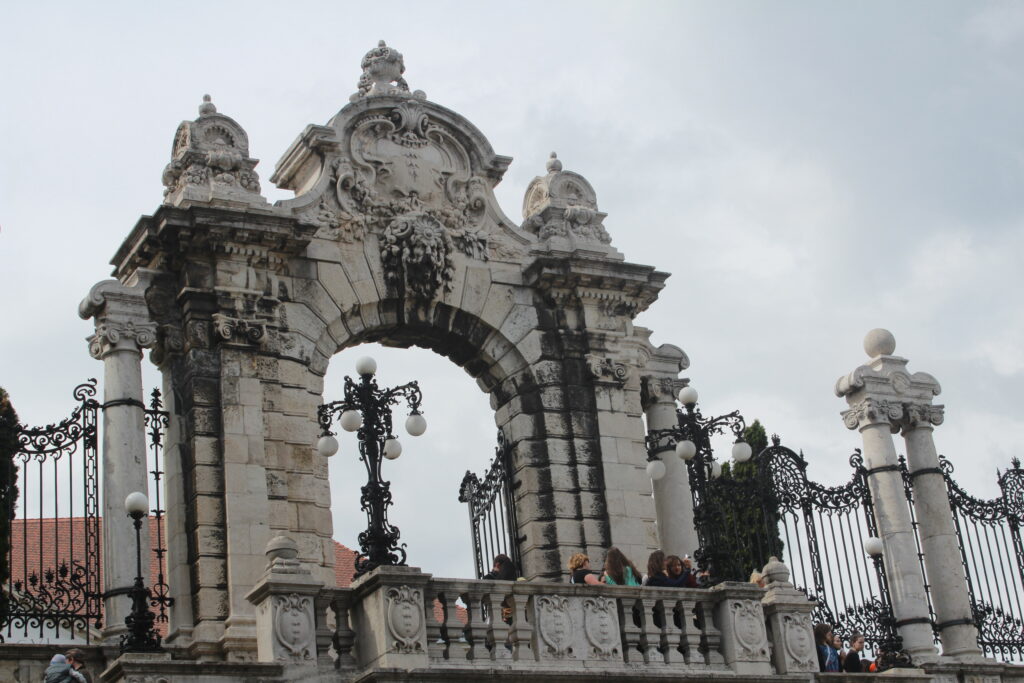
- G.W.F. Hegel went even further than Plato by claiming that artistic beauty surpasses natural beauty, because it fuses nature with human spirit. In this view, a beautiful building is not just a shelter, it’s an expression of culture, intellect, and meaning.
Kant and Hegel helped shift attention to how we experience beauty, and how our minds contribute to creating and recognizing it. Architecture, which must combine structural logic with human-centered design, is one of the clearest expressions of this synthesis.
Beauty’s Decline and Return in the 20th Century
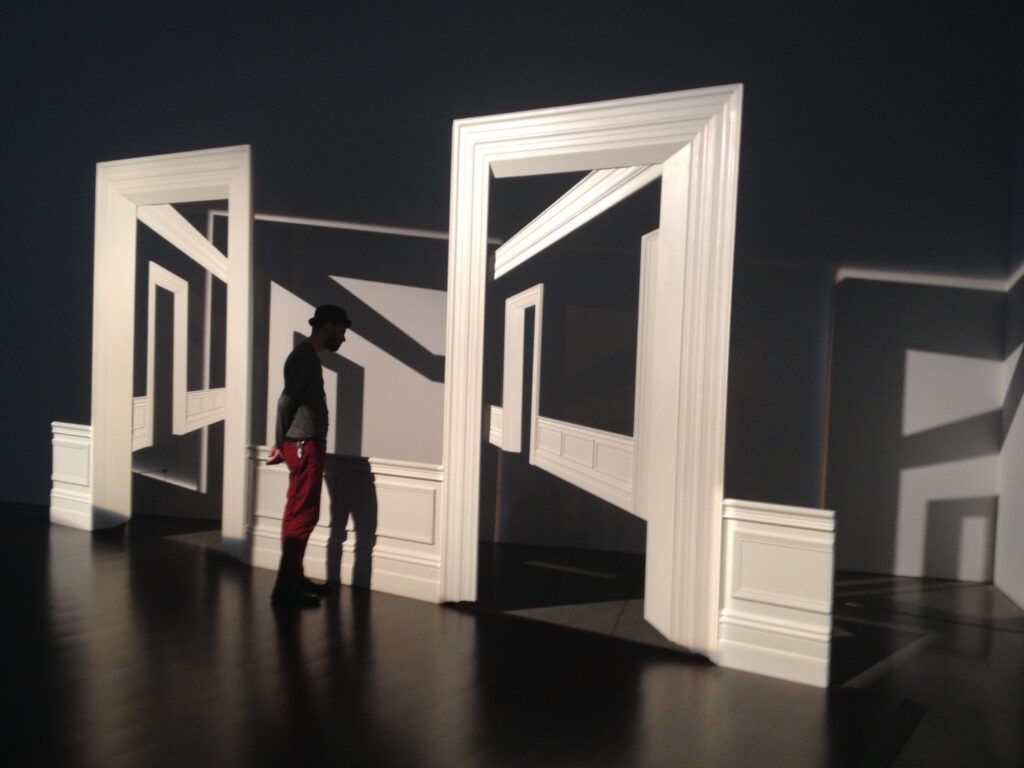
In the 20th century, beauty fell out of favor, especially in art and, to some extent, in architecture. After two world wars, many artists and thinkers rejected traditional ideals. Max Ernst, a Dadaist, said of his work: “It was not meant to attract, but to make people scream.”
Barnett Newman later declared: “The impulse of modern art was this desire to destroy beauty.” This spirit of rebellion extended into modernist architecture, where ornament was famously labeled a crime. Beauty was seen as nostalgic or indulgent. Meaning, utility, and raw materiality took precedence.
Yet even as modernism minimized beauty, aesthetic considerations never disappeared. We still respond to materials, textures, light, form, and rhythm. The sensory experience of architecture remains powerful. It often determines whether we want to enter, linger, or return to a space.
By the 1990s, beauty began to reemerge in philosophical and cultural discussions. Arthur Danto’s The Abuse of Beauty traced how beauty was pushed out of art and argued for its necessary role in life. He concluded that while beauty may no longer define art, it is essential for human flourishing.
This renewed interest in beauty resonates with contemporary architecture, especially as designers seek to create environments that promote well-being. Neuroscientists like Anjan Chatterjee (The Aesthetic Brain) and psychologists like Nancy Etcoff (Survival of the Prettiest) have added scientific weight to the idea that beauty is not a luxury but a basic human value.
Whether in the curves of a chair, the lines of a skyline, or the proportions of a public square, beauty still matters. It may be more vital now than ever.
Conclusion
From Plato’s metaphysical ideals to Aquinas’s clarity and Kant’s insights on form and feeling, beauty has been a central concern of philosophy and a guiding force in architecture. While styles and theories shift, the pursuit of beauty continues to shape how we build and inhabit the world.
As we design for the future—balancing sustainability, technology, and social needs—revisiting the philosophical roots of beauty can ground our work in something timeless.
After all, beauty isn’t just about appearances. It is about meaning, purpose, and the deep pleasure we feel when something is just right, whether that something is a cathedral, a home, or a single brick laid well.
Look for Part 2 on the Sublime.